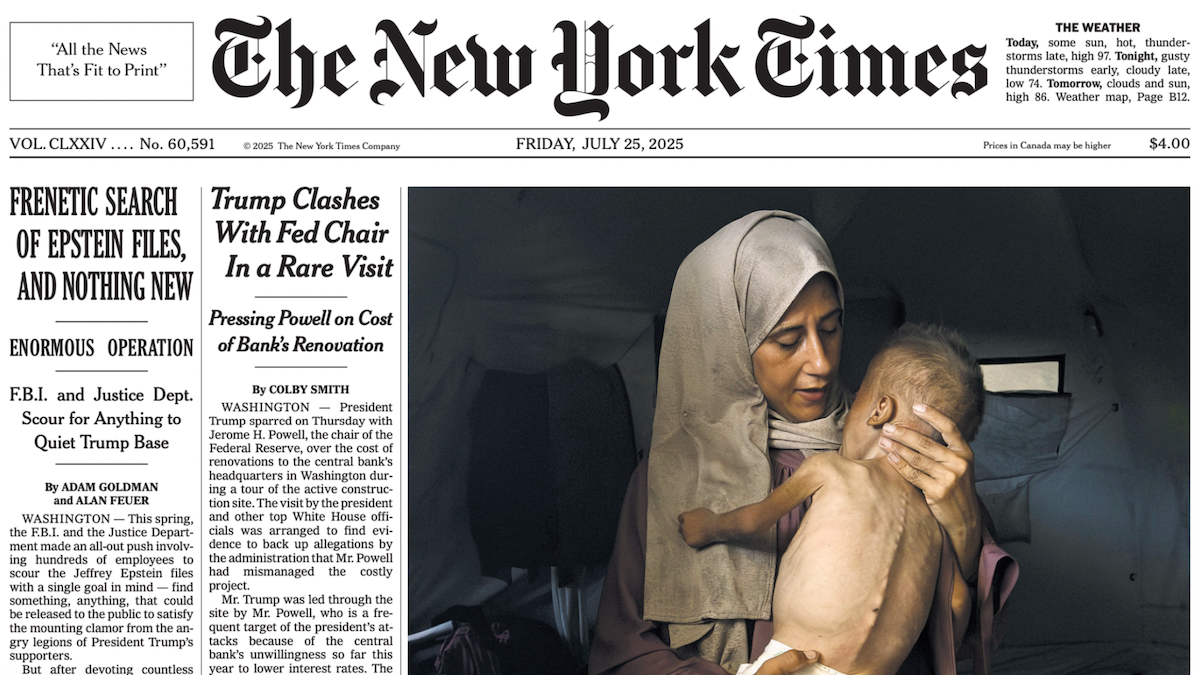
The New York Times defended Pulitzer Prize-winning photographer Saher Alghorra against allegations that he staged scenes and maintained ties to Hamas while covering the Gaza war. The Times called the claims "baseless" in a statement released after scrutiny of Alghorra's work emerged online.
Meaghan Looram, the Times' director of photography, emphasized Alghorra's dual role as both witness and subject. "Saher is not merely documenting this war, he is also living through it himself," Looram said, underscoring that the photographer operates from within the conflict zone rather than as an outside observer.
Alghorra won the Pulitzer Prize for Feature Photography in 2024 for his visceral images from Gaza, which captured the humanitarian devastation and human toll of the ongoing conflict. His work has appeared prominently in the Times and other major publications, establishing him as one of the most visible photojournalists reporting from the region.
The defense arrives as war photography faces heightened scrutiny regarding objectivity and access. Critics questioned whether Alghorra's documented scenes reflected spontaneous moments or arranged compositions. The allegations also included suggestions of institutional connections, raising questions about journalistic independence and editorial standards.
The Times' response positions Alghorra's perspective as authentic precisely because he experiences the war firsthand. This framing addresses a central tension in conflict photography. journalists embedded in war zones navigate competing demands. they report the truth while surviving the conditions they document. their proximity grants access that distant observers cannot achieve, but it also complicates claims of detachment.
The controversy reflects broader debates about Gaza coverage. News organizations balance giving voice to on-the-ground sources with maintaining editorial rigor. Major outlets have faced criticism from multiple directions. some accuse them of insufficient coverage of Palestinian suffering. others question the sourcing and framing of Gaza reporting.