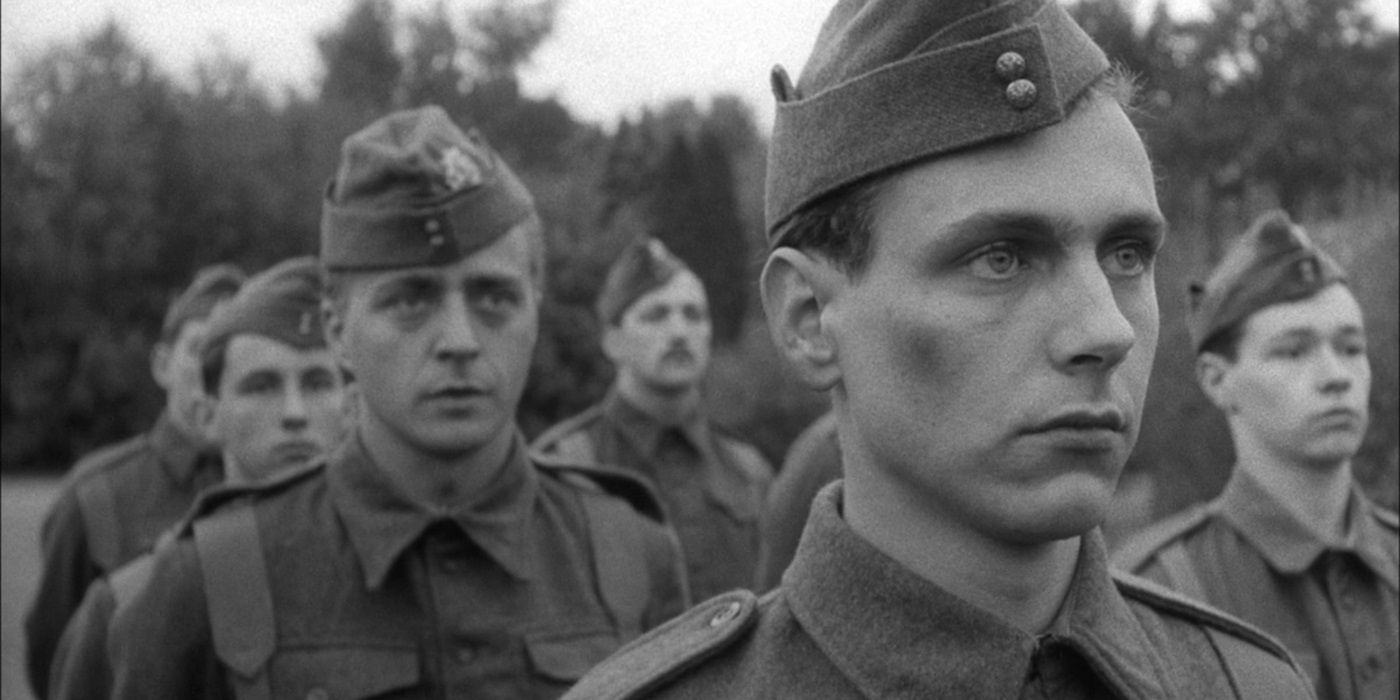
Stuart Cooper's "Overlord" stands as one of cinema's most uncompromising war films, yet it remains criminally underseen despite its 90% Rotten Tomatoes score on HBO Max. The 1975 British film achieves something rare: it balances visceral authenticity with devastating emotional resonance.
Cooper's approach defies the typical war movie playbook. Rather than rely solely on staged combat sequences, he weaves actual World War II archival footage throughout the narrative, creating a documentary-realism hybrid that feels unflinching and immediate. The effect is jarring. Audiences watch reconstructed scenes blend seamlessly with genuine combat footage, collapsing the distance between dramatization and historical record.
The film follows a young soldier whose ordinary life before deployment mirrors millions of real servicemen. This everyman protagonist grounds the film's larger themes. Cooper refuses sentimentality even as he traces the character's journey toward the Normandy invasion. The emotional weight comes not from melodrama but from the accumulation of small, human moments contrasted against the industrial scale of warfare captured in the archival material.
"Overlord" belongs to a lineage of war films that prioritize authenticity over spectacle. Unlike later productions that treat combat as cinematic set pieces, Cooper treats it as catastrophe. The archival footage doesn't enhance the narrative for dramatic effect. It testifies. It indicts.
The film's relative obscurity speaks to broader audience preferences. War movies often succeed through star power, budget scale, or narrative heroism. "Overlord" offers none of these comforts. It's a historical text masquerading as fiction, which makes it educational and devastating in equal measure.
HBO Max's availability represents an opportunity for rediscovery. Modern audiences accustomed to prestige war television like "Band of Brothers" or "The Pacific" will recognize Cooper