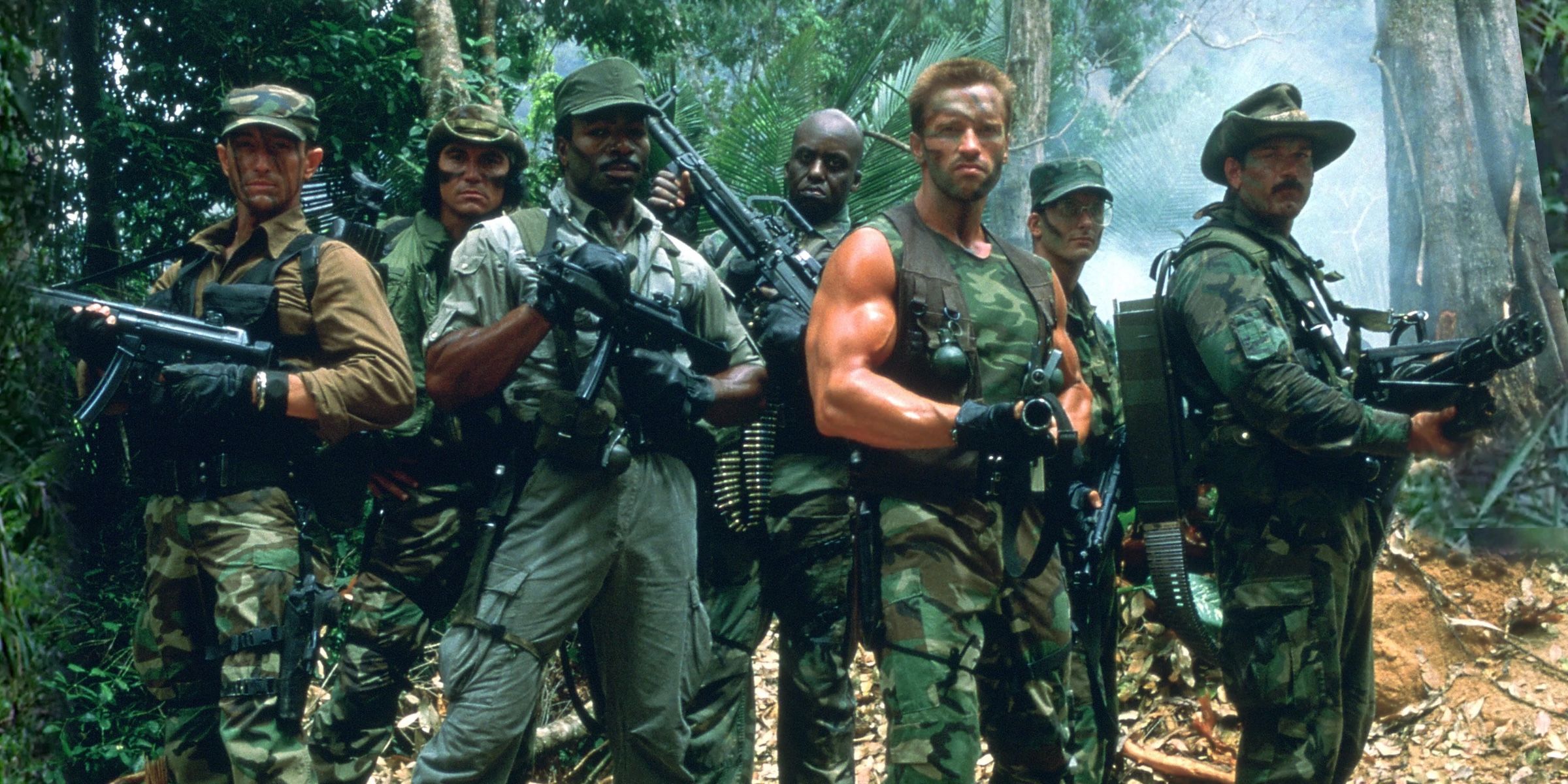
Collider assembles a ranking of the ten greatest sci-fi action films built around military forces battling extraterrestrial threats. The list anchors itself on three canonical entries: John McTiernan's "Predator," James Cameron's "Aliens," and Paul Verhoeven's "Starship Troopers." Each film represents a distinct approach to the subgenre.
"Predator" (1987) remains the gold standard for lean, muscular action cinema. Arnold Schwarzenegger leads an elite commando unit into the jungle to face an invisible hunter from deep space. The film strips the concept to essentials: soldiers, weapons, and an unknown enemy. McTiernan's direction prioritizes tension over exposition.
"Aliens" (1986) scales up the threat exponentially. Cameron transforms "Alien's" isolated horror into a full-scale military operation, with Sigourney Weaver's Ellen Ripley commanding space marines against a hive of xenomorphs. The film balances practical effects, weaponry, and squad dynamics to create relentless momentum.
"Starship Troopers" (1997) embraces satire alongside spectacle. Verhoeven crafts a dystopian action film that mocks militarism and fascism while delivering genuine bug-hunting thrills. The film's propaganda-news-report framing device undercuts its own heroism narrative.
These three titles define what makes military-versus-aliens storytelling work: tactical urgency, practical creature design, and charismatic ensemble casts. The subgenre thrives when filmmakers treat soldiers as competent professionals rather than cannon fodder, and when aliens feel genuinely threatening rather than decorative.
The ranking likely includes other contenders that balance science fiction worldbuilding with combat sequences. Films in this category demand strong action chore