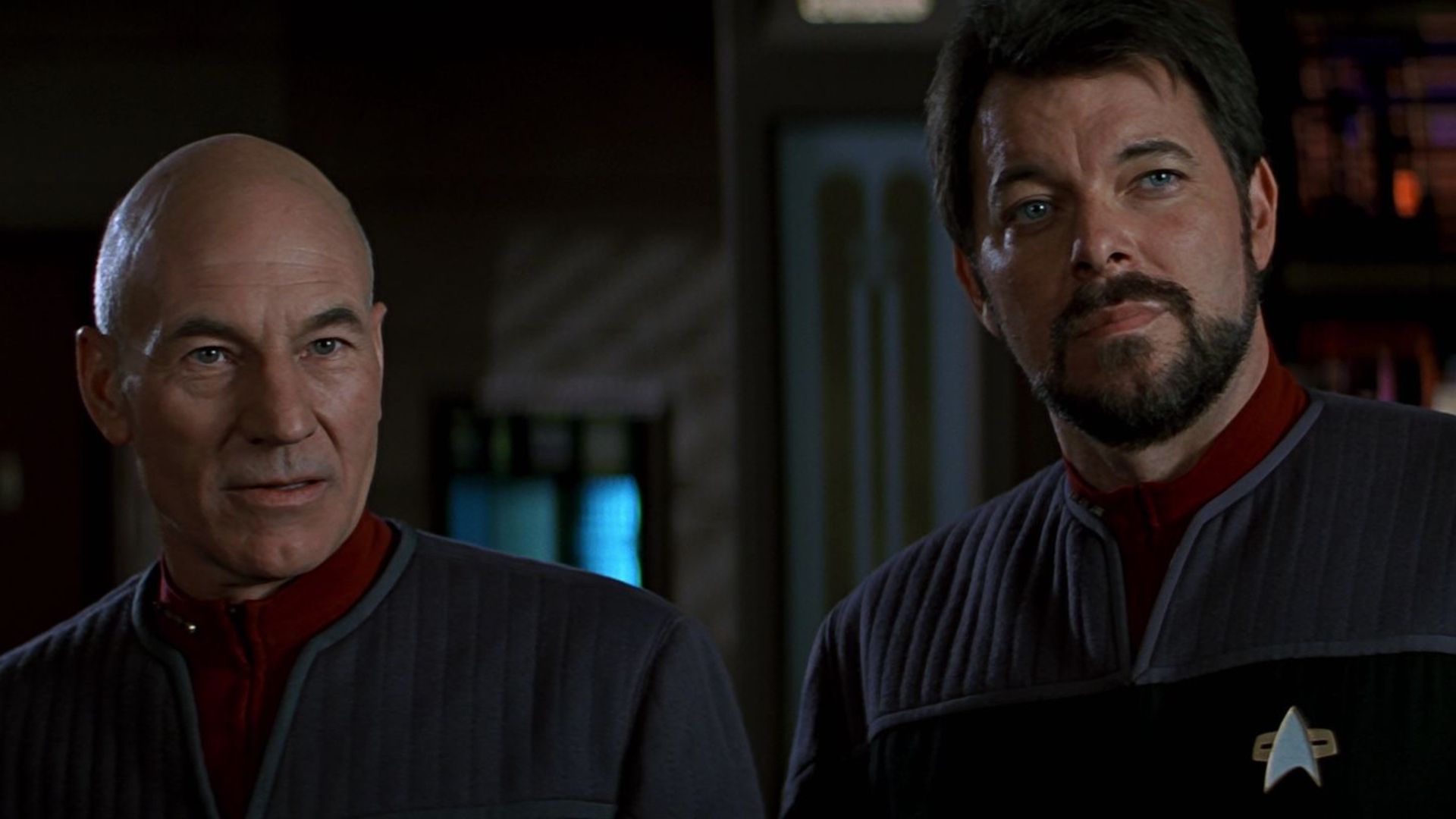
Star Trek: First Contact arrived in 1996 with a visual refresh that unified the franchise's fractured aesthetic. The film introduced the sleek black and gray Starfleet uniforms that became the most iconic look of the 24th century, replacing the varied color schemes that had defined The Next Generation, Deep Space Nine, and Voyager.
For a fleeting moment, all three shows adopted the same uniform design. This standardization proved revolutionary for franchise continuity. The Next Generation had worn those iconic red and black uniforms since 1987. Deep Space Nine launched in 1993 with a modified version. Voyager followed in 1995 with yet another iteration. First Contact's timing allowed it to impose visual coherence across the entire 24th century timeline.
The new uniforms worked because they captured the sleek militarism of the Dominion War era while maintaining Starfleet's optimistic DNA. The design balanced form and function in ways the earlier costumes hadn't quite achieved. The blacks and grays suggested both danger and sophistication. They felt earned for a fleet actually fighting an existential conflict for the first time.
The uniformity didn't last long. When Enterprise premiered in 2001 as a prequel, it required different costumes entirely. The later shows Picard and Discovery developed their own looks. But for those few years in the late 1990s, when First Contact's aesthetic rippled across television, Star Trek felt genuinely unified for the first time since the original series.
The uniforms became such a defining image that fans still cite First Contact as the franchise's visual peak. They represented not just costume design but a creative decision to make 24th century Starfleet feel like one cohesive institution rather than a collection of separate shows operating in the same timeline. That aesthetic clarity, however briefly achieved, remains one of the franchise's smart