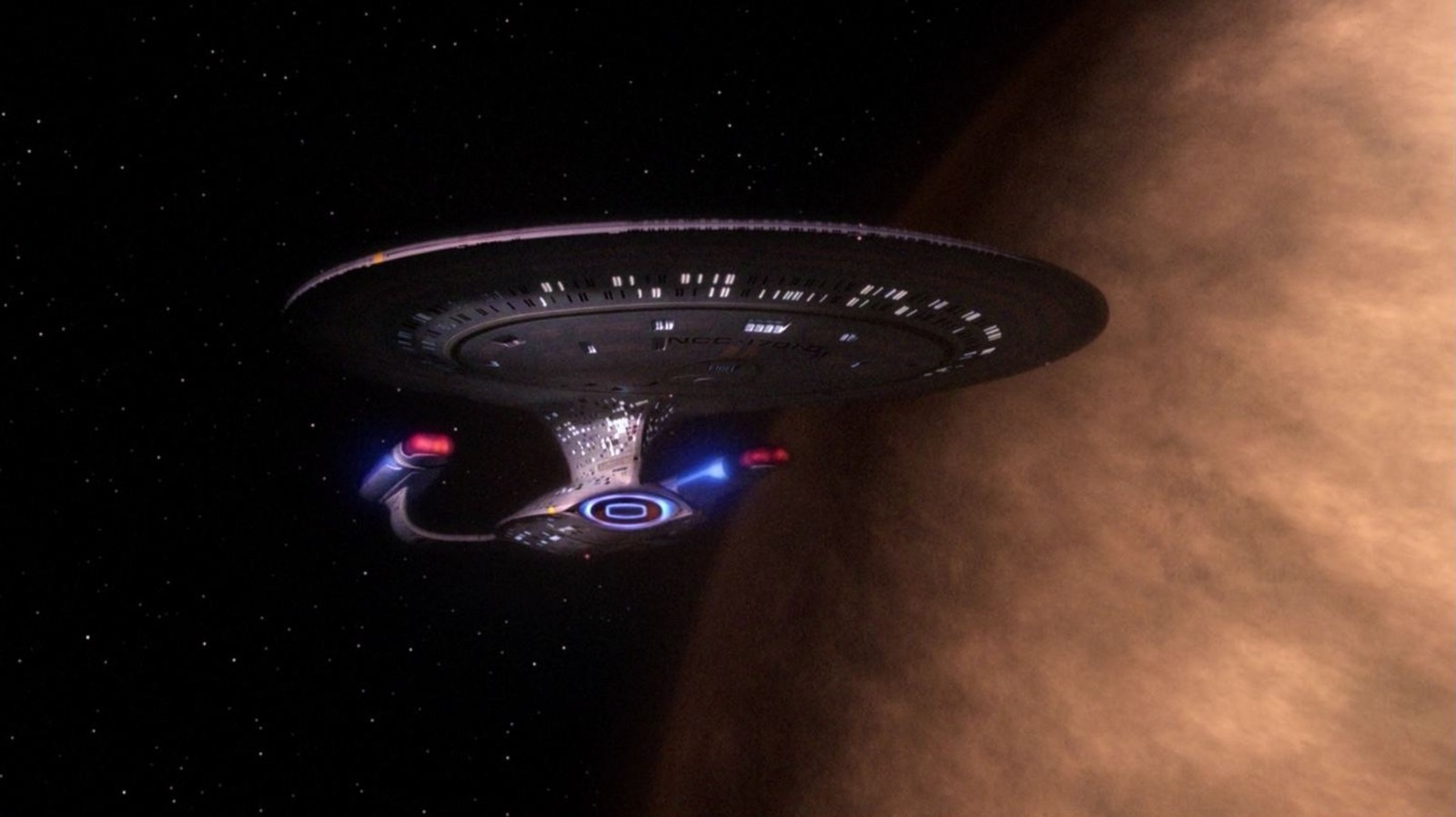
Star Trek's fictional communication system has become so embedded in the franchise's DNA that fans rarely question its mechanics. Subspace communication represents the technological backbone allowing starships to transmit messages across vast interstellar distances faster than conventional radio waves.
The concept emerged early in the original series as a solution to a fundamental storytelling problem: how could crews separated by light-years maintain contact without massive plot delays? Subspace channels became the answer, operating through a theoretical quantum layer beneath normal space. This pseudo-scientific framework lets writers send urgent distress calls, crew updates, and plot-critical information instantly across galaxies.
Different Star Trek iterations have refined the concept over decades. The Next Generation, Deep Space Nine, Voyager, and Discovery all employed subspace communication as essential worldbuilding infrastructure. Each show adapted the technology's limitations and capabilities based on narrative needs. Voyager notably exploited subspace constraints as a central premise, with the USS Voyager stranded 70,000 light-years from home and struggling to maintain contact through degraded subspace channels.
The real appeal lies in how subspace communication functions as invisible scaffolding. It solves logistical problems while remaining transparent to audiences. Unlike warp drives or dilithium crystals that receive dedicated explanation, subspace mostly vanishes into background—a command to "open a channel" and boom, communication established.
Technically, Star Trek expanded the concept beyond simple messaging. Subspace signals can carry sensor data, transport patterns for the transporter system, and even medical information. Some episodes explored vulnerabilities where hostile forces jammed or infiltrated subspace networks, creating dramatic tension through technological sabotage.
The franchise's approach reflects broader science fiction tradition. While scientifically unfounded, subspace communication maintains internal logical consistency across hundreds of episodes and films. It represents Star Trek's willingness to invent plausible-sounding solutions