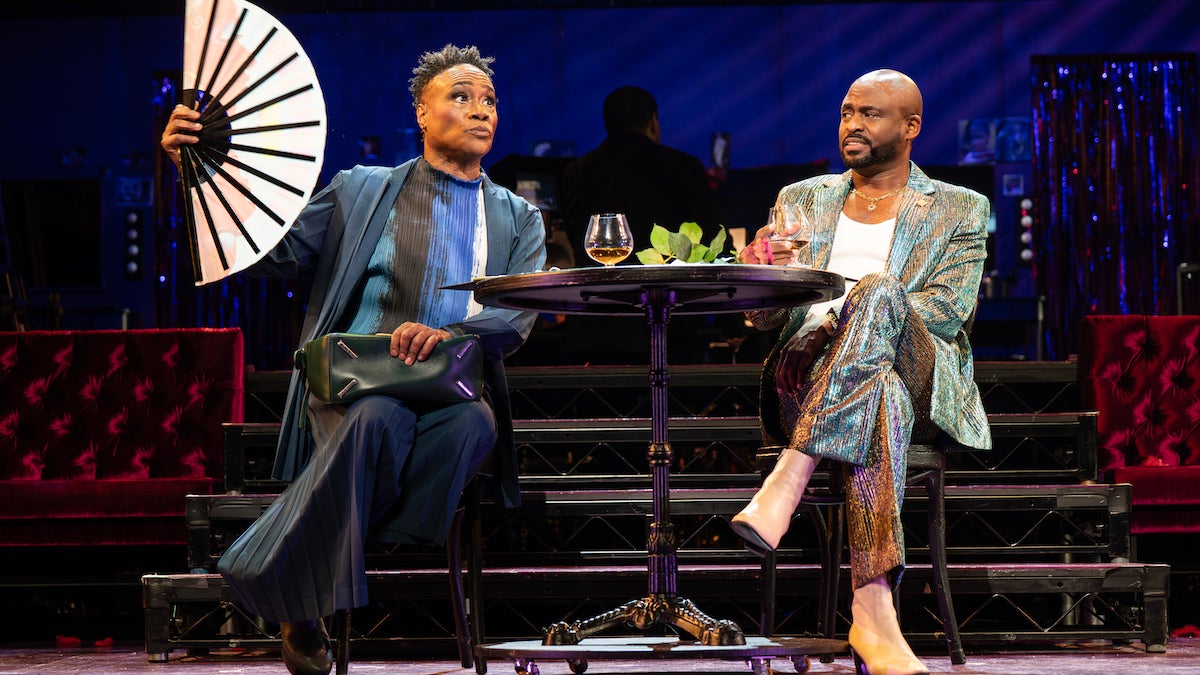
Billy Porter and Wayne Brady elevate a creaky revival of "La Cage aux Folles" through sheer charisma and commitment to authenticity. The 1983 Jerry Herman musical, which won six Tony Awards in its original run, arrives at an Off Broadway theater with its book and score largely intact. The material shows its age. Songs drag. Plot mechanics creak. The premise of two gay nightclub owners navigating a dinner with their son's conservative future in-laws feels dated in execution, even if the emotional core about found family and acceptance retains validity.
Porter and Brady compensate through force of presence. When they're together on stage, which happens frequently, the production catches fire. Porter brings vocal power and dramatic authority to Albin, the flamboyant drag performer who anchors the show. Brady, as his partner Michel, provides grounding and emotional texture. Their chemistry transforms scenes that could play as museum pieces into moments that register with genuine feeling. The two stars refuse to treat the material as camp footnote or period artifact. They play it straight, which paradoxically makes the comedy land harder and the stakes feel real.
The supporting cast and production design can't match their energy. Director Leigh Silverman stages the show competently but without notable invention. The nightclub sequences lack the visual spectacle that might compensate for Herman's occasionally plodding score. "I Am What I Am," the show's showstopper ballad, still lands when Porter performs it, but surrounding numbers feel like obligations rather than dramatic peaks.
"La Cage aux Folles" endures because its heart matters. The story about a parent accepting their child's partner and learning to embrace love in all forms connects across decades. Porter and Brady understand this. They don't wink at the audience. They inhabit these men with dignity and tenderness alongside humor. That commitment carries you through the slower