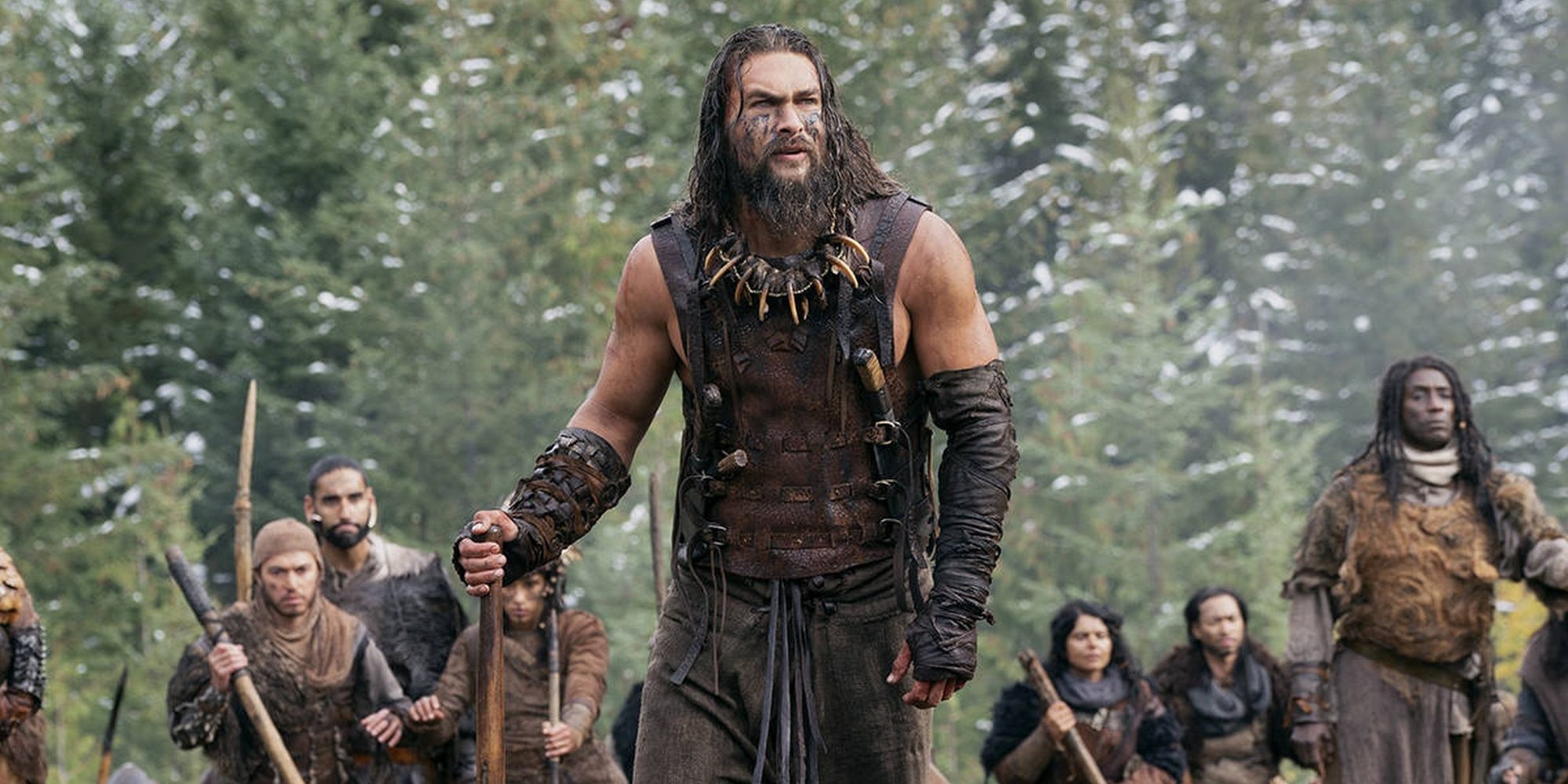
Jason Momoa's "See" remains one of Apple TV+'s most underrated efforts, a sprawling post-apocalyptic drama that premiered in 2019 and ran for three seasons before concluding in 2022. The series places Momoa in a ravaged future where humanity has lost the ability to see for generations, only to have his character's children born with functional vision, disrupting the entire social order of their world.
The show built a devoted cult following despite being largely overshadowed by Apple's prestige slate, which included "Ted Lasso," "The Morning Show," and "Severance." "See" offered something different: brutal, primal storytelling rooted in tactile world-building rather than high-concept premises or prestige drama trappings. Momoa delivered perhaps his most committed dramatic performance, moving beyond the charm he brought to "Aquaman" to embody a hardened warrior father protecting his remarkable children.
The three-season arc spans eight episodes per season, making it entirely feasible for a weekend viewing commitment. The show never sacrificed narrative momentum for world-building exposition, instead letting audiences discover this tactile civilization through action and character interaction. Supporting performances from Sylvia Hoeks and Hera Hilmar grounded the mythology, while Alfre Woodard and Dave Bautista added weight to the ensemble.
What made "See" distinctive was its commitment to depicting blindness authentically rather than as mere set dressing. The series consulted with blind individuals and communities to ensure respectful representation, crafting fight choreography and visual storytelling that reflected how characters actually navigated their world.
Apple's decision to conclude the series before it became a runaway cultural phenomenon speaks to streaming's unpredictable greenlight patterns. "See" landed in that frustrating middle ground where it maintained quality across three seasons but never achieved