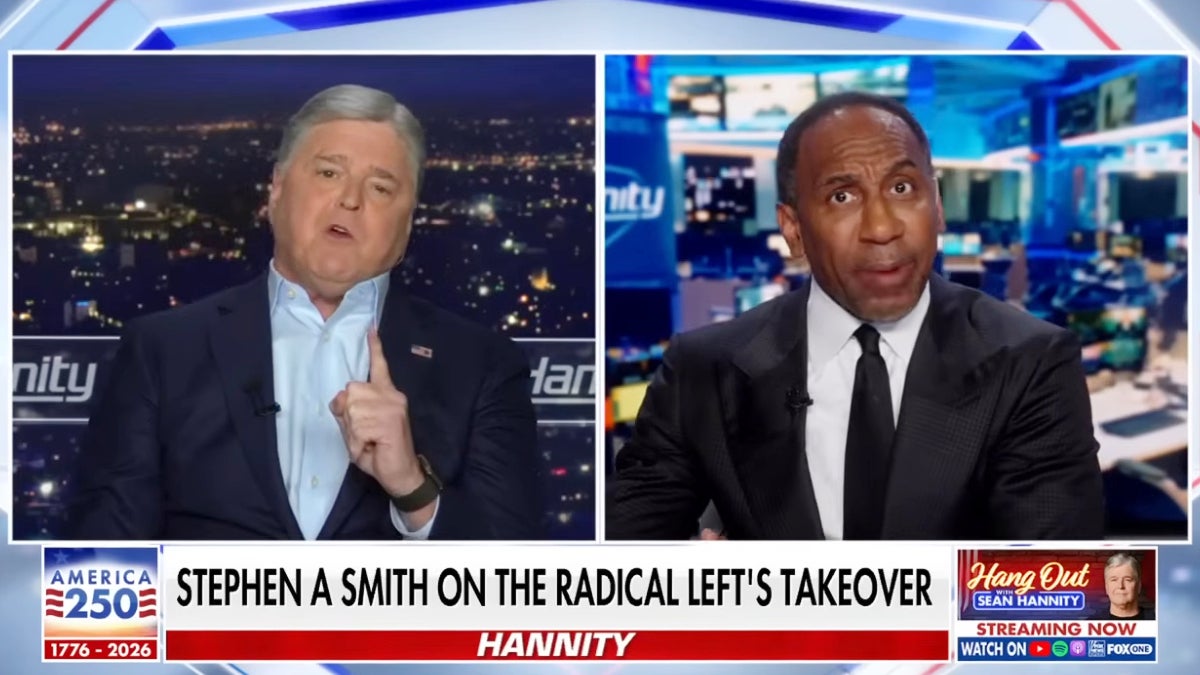
Stephen A. Smith clashed with Sean Hannity during a heated segment involving Democratic candidate Shawn Mamdani, with the ESPN sports commentator accusing the Fox News host of biased questioning tactics. Smith challenged Hannity's framing of the exchange, declaring "I don't support any of it" while criticizing what he called "leading the witness" during the debate.
The confrontation underscores the blurred lines between sports media and political commentary. Smith, known for his outspoken presence on "First Take" and "SportsCenter," has increasingly waded into political territory, particularly regarding Democratic Party direction. His intervention suggests frustration with how the party operates at its current moment.
Smith's frustration centers on what he views as manipulative questioning rather than genuine political debate. By invoking legal terminology around witness-leading, he's flagging editorial bias in how Hannity framed questions to Mamdani. This matters because it reveals tension within cable news ecosystems where hosts impose narratives rather than facilitate genuine discourse.
The Democratic Party criticism from Smith carries weight given his prominence as a Black commentator with substantial cultural reach. His statement that "somebody's got to stand up and fight" for the party's direction reflects anxiety among prominent figures about internal party coherence heading into electoral cycles. Smith positions himself as someone willing to call out failures regardless of partisan allegiance.
Hannity remains Fox News' prime-time anchor and political kingmaker with direct access to Republican leadership. Smith's willingness to publicly challenge him on-camera demonstrates confidence in his own platform and audience. "First Take" commands loyal viewership among sports fans and cultural observers who respect Smith's combative take-no-prisoners style.
The segment reflects broader cable news dysfunction where editorial point-of-view supersedes journalistic questioning. Smith's intervention registers as a moment of accountability television rarely provides itself, with one on-