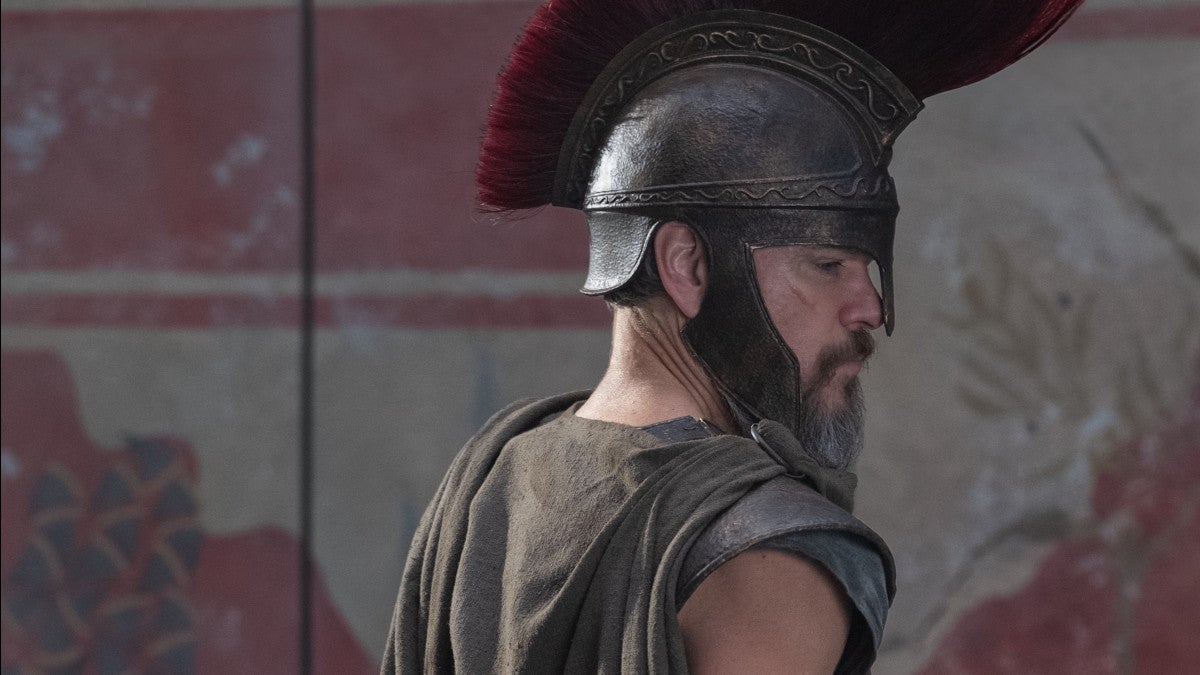
Christopher Nolan is taking a bold linguistic gamble with his upcoming adaptation of Homer's "The Odyssey." The Oscar-winning director chose to stage the ancient epic in modern English rather than attempting period-authentic dialogue or Homeric verse, calling the decision "a no-brainer" for his vision.
Nolan's rationale centers on accessibility and narrative immediacy. By grounding "The Odyssey" in contemporary language, he aims to create what he describes as "an earthy narrative" that connects directly with audiences. The choice strips away the formality and distance that classical adaptations often impose, allowing viewers to engage with the story's emotional core rather than getting caught in linguistic performance.
The director acknowledges the risk. "It might bite me on the ass," Nolan admits, recognizing that purists may bristle at translating Homer into 21st-century vernacular. Literary adaptations always court such criticism, particularly with source material as canonical as "The Odyssey." Yet Nolan's track record with ambitious storytelling, from "Inception" to "Oppenheimer," suggests he's willing to challenge expectations when serving his artistic vision.
This approach reflects broader trends in prestige filmmaking. Directors increasingly treat classical source material as narrative architecture rather than textual artifacts to preserve. Denis Villeneuve's "Dune" films use contemporary dialogue despite their fantastical setting. Greta Gerwig's period pieces ground themselves in accessible language that serves character development over historical authenticity.
"The Odyssey" represents Nolan's largest classical undertaking yet. With a budget reported at over $250 million, it ranks among cinema's most expensive productions. The film will explore Odysseus's decade-long journey home after the Trojan War, a narrative that has inspired adaptations across mediums since antiquity. Nolan's modernized