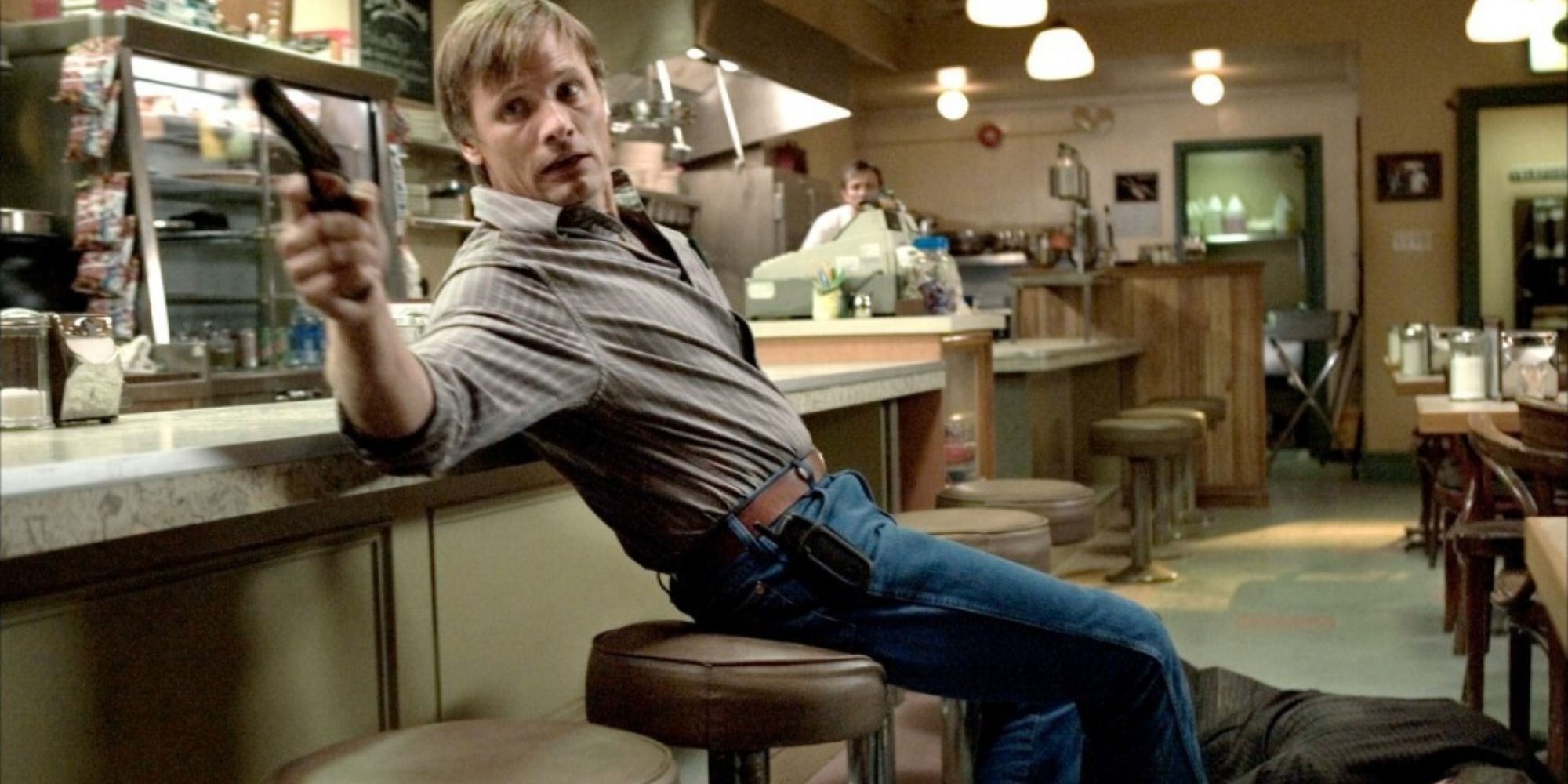
David Cronenberg's "A History of Violence" remains a masterclass in adapting source material nearly two decades after its 2005 release. The film, based on the 1997 graphic novel by John Wagner and Vince Locke, proves that comic book stories belong in serious cinema when handled by visionary directors.
Viggo Mortensen anchors the film as Tom Carlyle, a small-town diner owner whose violent past catches up with him. The role demands nuance. Mortensen shifts seamlessly between domestic tenderness and brutal competence, exploring how a man reconciles his desire for an ordinary life with the lethal skills he can't unlearn.
Cronenberg's approach strips away superhero spectacle entirely. Instead of capes or superpowers, the film examines primal violence as a genetic and moral inheritance. The director uses sparse dialogue and prolonged silences to build tension, letting the story breathe rather than explaining itself through exposition.
The supporting cast elevates every scene. Maria Bello as Edie, Tom's wife, conveys complicated emotions through quiet moments and loaded glances. Ed Harris, as Carl Fogelson, embodies menace through restraint. William Hurt appears briefly but leaves an impression as Tom's brother Richie, whose presence destabilizes everything.
What distinguishes "A History of Violence" from most comic book adaptations is its refusal to sanitize the source material. Cronenberg captures the graphic novel's moral ambiguity. The violence carries weight and consequence rather than serving as spectacle. When Tom's past emerges, it doesn't vindicate him. It complicates our sympathy.
The film's streaming availability on HBO Max introduces it to audiences who may have missed its theatrical run. For those rediscovering it, the craft remains staggering. Howard Shore's minimal