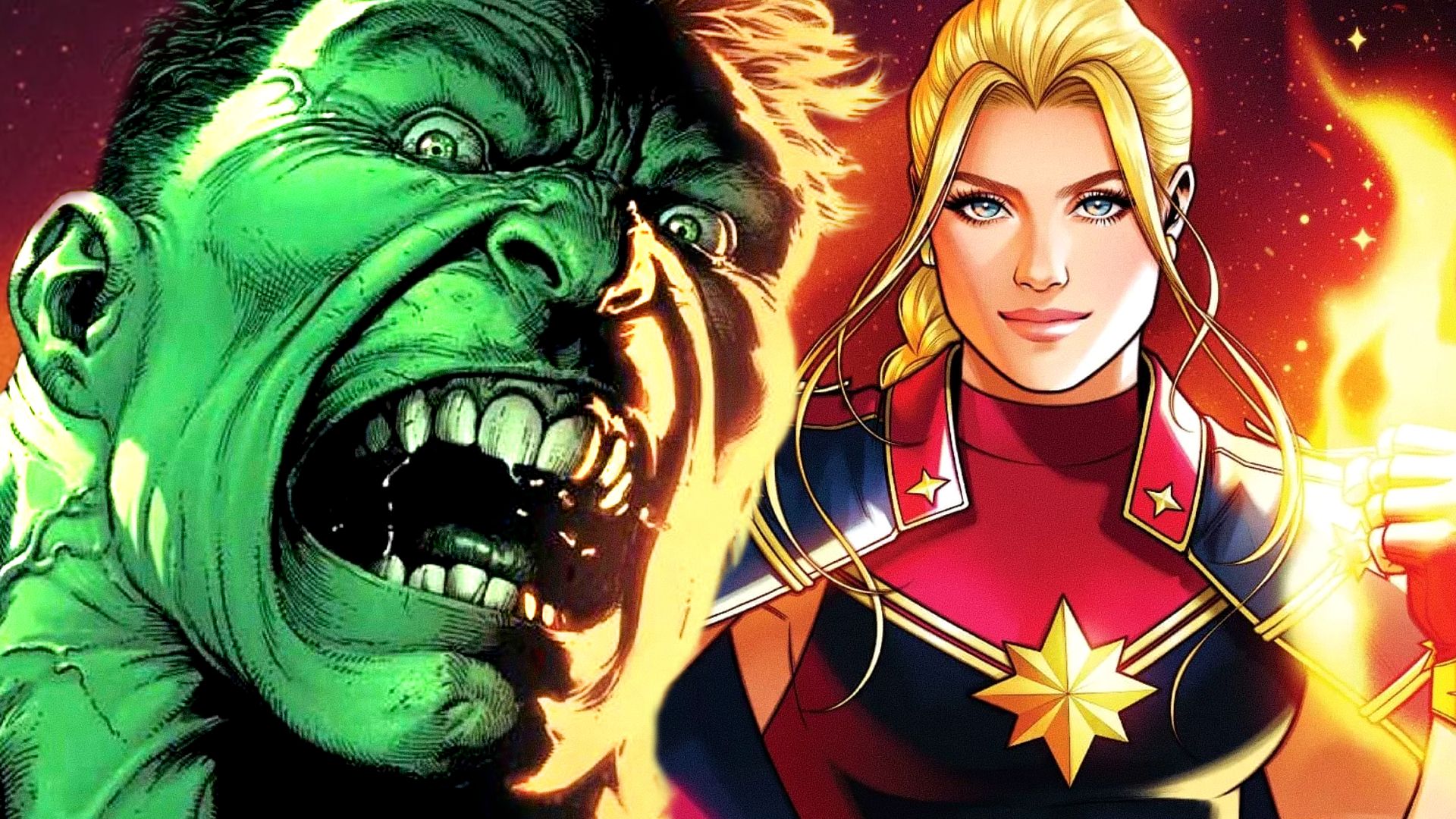
Marvel has settled the long-running fan debate over who would win in a fight between Captain Marvel and the Hulk, and the answer comes down to something simpler than raw power: surrender.
The MCU's official confirmation resolves years of speculation among comic book audiences about how these two powerhouses would match up. Captain Marvel, portrayed by Brie Larson across films like "Captain Marvel" and "Avengers: Endgame," brings cosmic-level abilities and near-invulnerability. The Hulk, embodied by Mark Ruffalo, offers brute strength and regenerative healing that makes him nearly impossible to kill through conventional means.
Rather than declare one fighter objectively stronger, Marvel's resolution hinges on character psychology and narrative logic. The outcome suggests that in any hypothetical confrontation, one of the Avengers would choose to concede rather than escalate to maximum destructive capacity. This avoids the thorny problem of determining whose power set actually exceeds the other's, a question that has vexed Marvel Studios' creative teams given how inconsistently both characters display their abilities across films.
Captain Marvel's power levels have fluctuated significantly throughout the MCU. She absorbed the full power of an Infinity Stone in "Endgame" but has shown vulnerability in other contexts. The Hulk similarly presents scaling issues. Bruce Banner's control over his alter ego improved across recent MCU projects, complicating the traditional "stronger when angrier" formula that once defined the character.
Marvel's approach reflects broader industry trends where studios prefer character-driven conflict resolution over pure power-scaling battles. This satisfies audiences invested in character motivations rather than comic book mathematics. The confirmation likely emerges from official Marvel documentation, creative interviews, or recent comic canon that fans have parsed for definitive answers.
For Marvel Studios, settling this debate preemptively prevents future