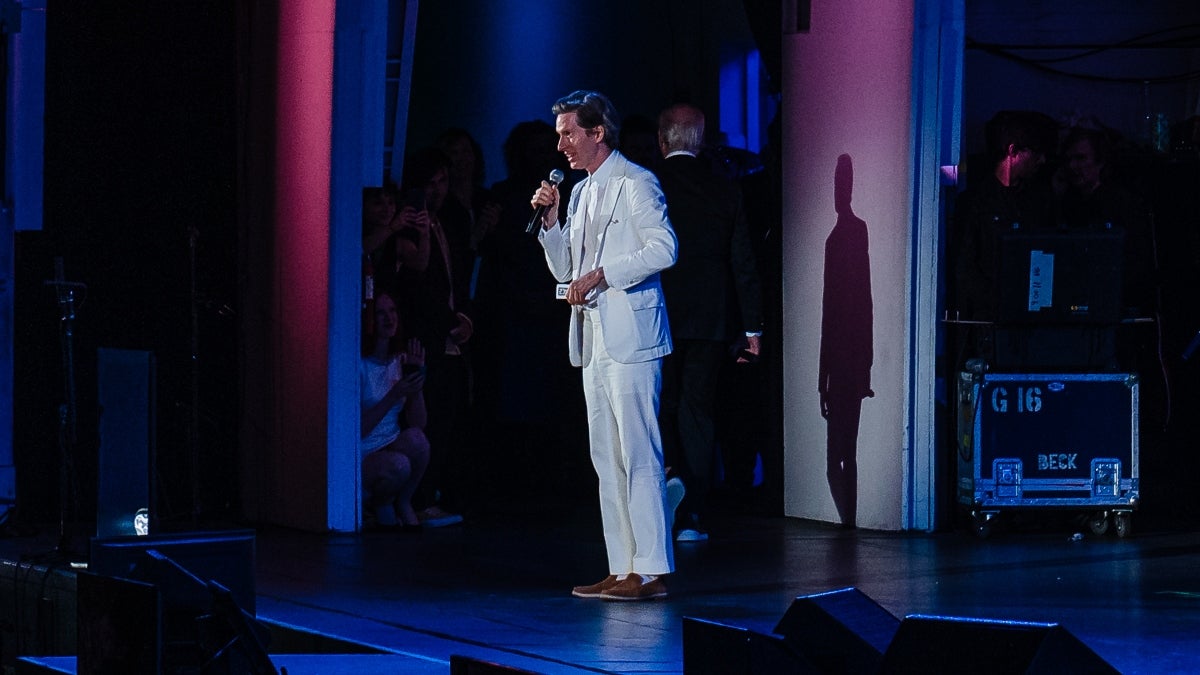
Wes Anderson transformed the Hollywood Bowl into a pastel-hued playground last weekend with "Music from the Films of Wes Anderson," a three-night concert event that celebrated the distinctive sonic landscapes of his meticulously crafted films. The event pulled together curated performances and live musicians to reimagine the scores and soundtracks that define Anderson's visual and auditory signature, from "The Grand Budapest Hotel" to "Rushmore" to "Moonrise Kingdom."
Anderson's films operate as total artistic statements where production design, color palette, and music exist in perfect symmetry. His collaborators, particularly composer Alexandre Desplat and his carefully selected needle drops from artists like The Rolling Stones and Nick Drake, become extensions of Anderson's symmetrical worldview. The Hollywood Bowl residency recognized this integration by staging a concert experience that honored both the original compositions and the curated tracks that populate his films.
The venue choice matters. The Hollywood Bowl carries its own storied history as a cultural institution, yet Anderson's aesthetic philosophy, with its quirky charm and meticulous attention to detail, typically operates outside mainstream institutional spaces. Placing his work inside one of Los Angeles' most recognizable landmarks created a collision between Anderson's indie sensibility and establishment prestige. The three-night format also amplified the event's scope, suggesting a deeper dive into his catalog than a single evening would allow.
For Anderson devotees and casual fans alike, the concert offered something increasingly rare in our fragmented streaming era: a communal experience built around a filmmaker's complete artistic vision. It centered on his music choices as much as his visual language, validating what serious fans have always known. Anderson's soundtracks don't simply accompany his images. They define them.
The event also arrives as Anderson continues navigating the transition from prestige independent cinema to larger studio productions. His films remain instantly recognizable, whether landing at