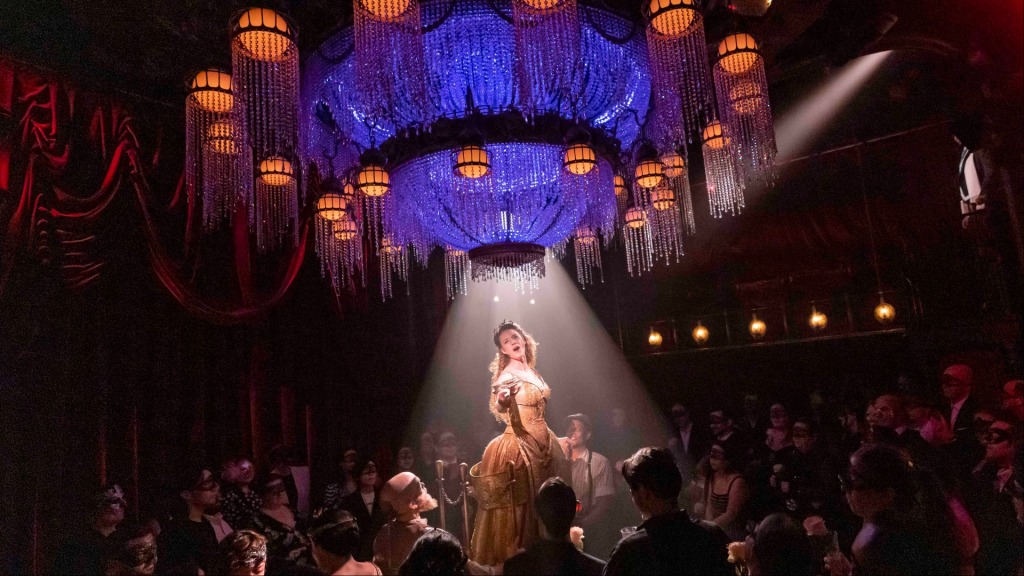
"Masquerade," the immersive reimagining of Andrew Lloyd Webber's "Phantom of the Opera," transforms the Lloyd Webber classic into a full-sensory theatrical event that captures what New York theater does best. This production strips away the proscenium stage format entirely, instead plunging audiences into a luxurious, multi-sensory experience that treats the musical as an occasion rather than a show.
The production reimagines the iconic "Masquerade" sequence into something far more expansive. Attendees don't sit and watch actors perform on a distant stage. They inhabit the same physical space as the performers, moving through lavishly designed environments that blur the line between spectacle and participation. The production designers have constructed an elaborate setting that functions as both venue and character, forcing audiences to move, explore, and engage rather than remain passive observers.
This approach reflects a broader shift in how Broadway and off-Broadway productions are experimenting with audience experience. Immersive theater has grown increasingly popular as a counterpoint to traditional staging, with shows like "Sleep No More" and "Hadestown" pushing boundaries. However, tackling "Phantom of the Opera" as an immersive production carries specific weight. Lloyd Webber's 1986 musical remains Broadway's longest-running show, with a legacy built on spectacle, romance, and architectural grandeur. Reimagining it demands respect for the source material while justifying the radical format shift.
The production succeeds by leaning into luxury. Rather than stripping down the experience, it doubles down on production design, atmosphere, and the visceral thrill of being surrounded by the world of the piece. Attendees become guests at the Palais Garnier, experiencing the opera house through the eyes of those who move within it. The musical's central relationship between Christine, Raoul