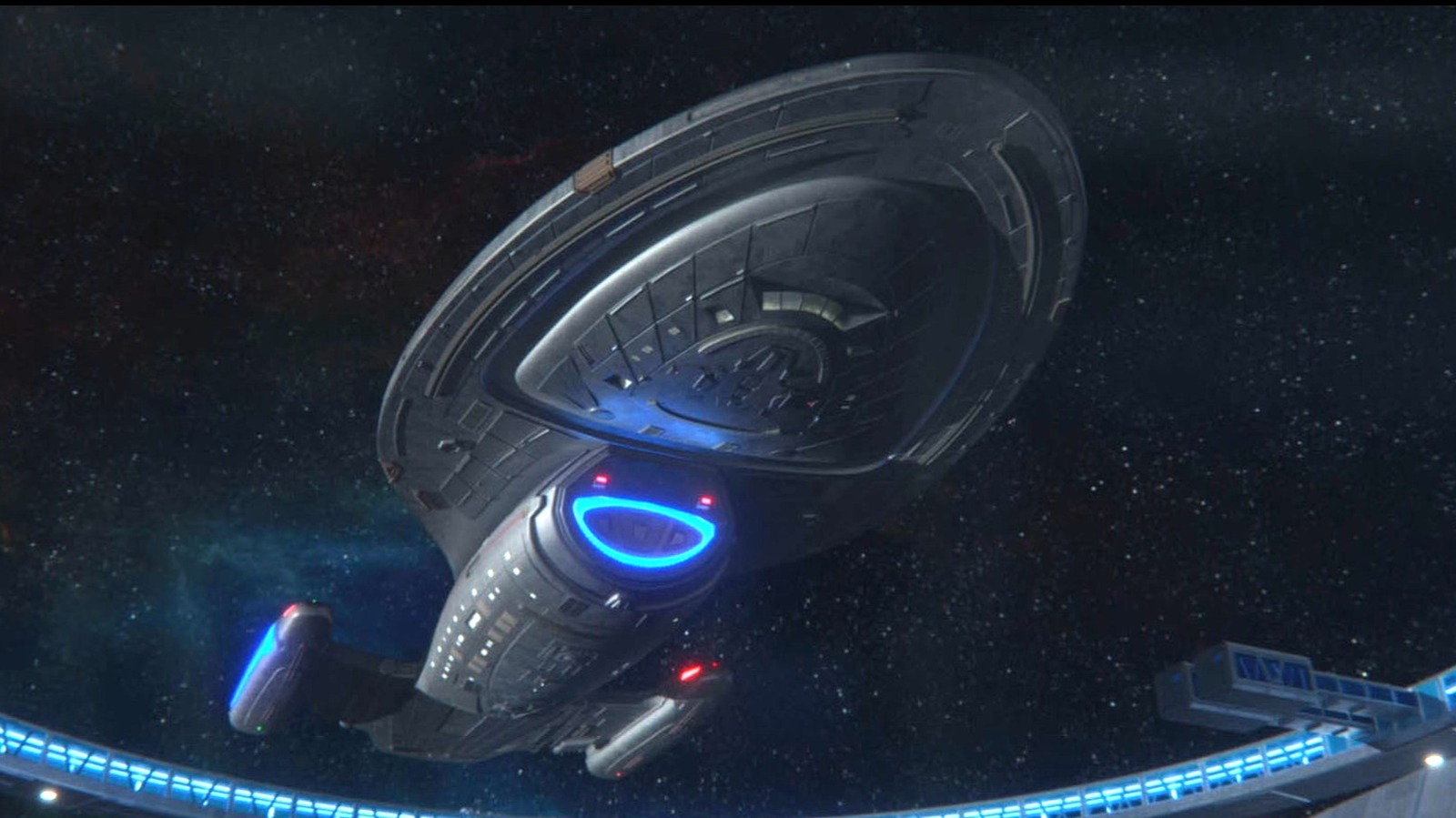
The USS Voyager breaks Starfleet design convention with folding nacelles, a distinctive feature that sets the Intrepid-class starship apart from other vessels in the Star Trek universe. While standard nacelles remain fixed structural components, Voyager's engineering design incorporates collapsible engine pods that can retract during certain operations.
This unique configuration stems from the ship's exploratory mission parameters and compact frame design. The Intrepid-class prioritizes maneuverability and efficiency for deep-space exploration, and the folding nacelles serve practical functions. They reduce the vessel's overall width during docking procedures and tight spatial navigation, a critical advantage when navigating through cramped alien constructs or hostile environments. The retractable design also optimizes power distribution and structural integrity during high-stress combat scenarios where a narrower profile becomes tactically advantageous.
Production designer Herman Zimmerman and the Star Trek: Voyager creative team incorporated the folding nacelles as both a visual identifier for the show's main ship and a narrative tool that reinforced Voyager's status as a specialized deep-space explorer rather than a standard Starfleet cruiser. The feature became iconic during the show's seven-season run from 1995 to 2001, instantly distinguishing Kate Mulgrew's Captain Janeway's command from the Enterprise-D under Jean-Luc Picard.
The decision also reflected technological storytelling within the Trek universe itself. The Intrepid-class represented cutting-edge Starfleet engineering, with innovations that justified the ship's survival against overwhelming odds in the Delta Quadrant. When Voyager ended up stranded 70,000 light-years from home, those engineering advantages proved essential to the crew's survival.
Contemporary Star Trek productions have occasionally referenced or revisited this design element, keeping the USS Voyager