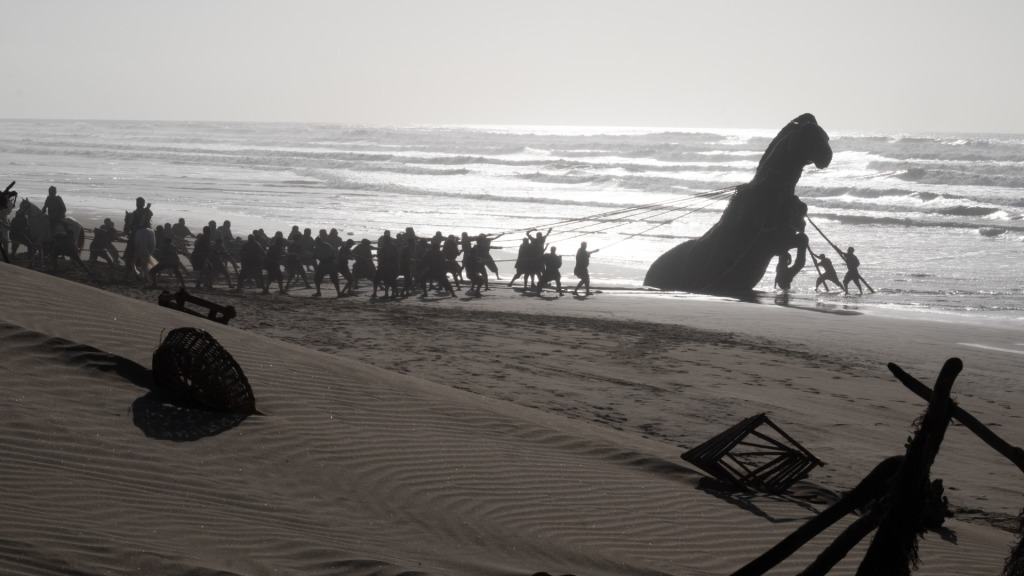
Christopher Nolan's latest film, The Odyssey, adapts Homer's epic poem into a blockbuster spectacle that retains the source material's surreal, mythological encounters. The AV Club's question poses an interesting challenge for the filmmaker, who has spent his career translating complex narratives into visual language for mainstream audiences.
Nolan's track record with classical storytelling differs markedly from his sci-fi work. While Inception and Interstellar bent reality through physics and psychology, The Odyssey grounds itself in ancient mythology. The film preserves the poem's weirdness, staging encounters with gods and monsters that could easily devolve into campy territory under lesser direction. Instead, Nolan crafts these moments with the same precision he brings to temporal manipulation and dream architecture.
The adaptation showcases Nolan's signature approach to source material: respecting the core narrative while introducing contemporary filmmaking techniques. The Odyssey's journey across mythological landscapes benefits from IMAX cinematography and practical effects work, choices that elevate the material beyond standard fantasy fare.
What distinguishes this project is Nolan's commitment to scale without sacrificing the intimate character work that drives Homer's original text. Ulysses' ten-year struggle home resonates not through CGI spectacle alone but through the tension between personal stakes and epic geography.
The question of which mythical moment Nolan executes best invites debate about sequences involving Polyphemus, Circe, or the Sirens. Each encounter demands different storytelling tools. The Cyclops scene requires brutal physicality. Circe's isle demands psychological manipulation. The Sirens test Nolan's ability to visualize seduction and danger simultaneously.
This film represents Nolan's most direct engagement with classical narrative since his reworking of Shakespeare's temporal themes in Dunkirk.