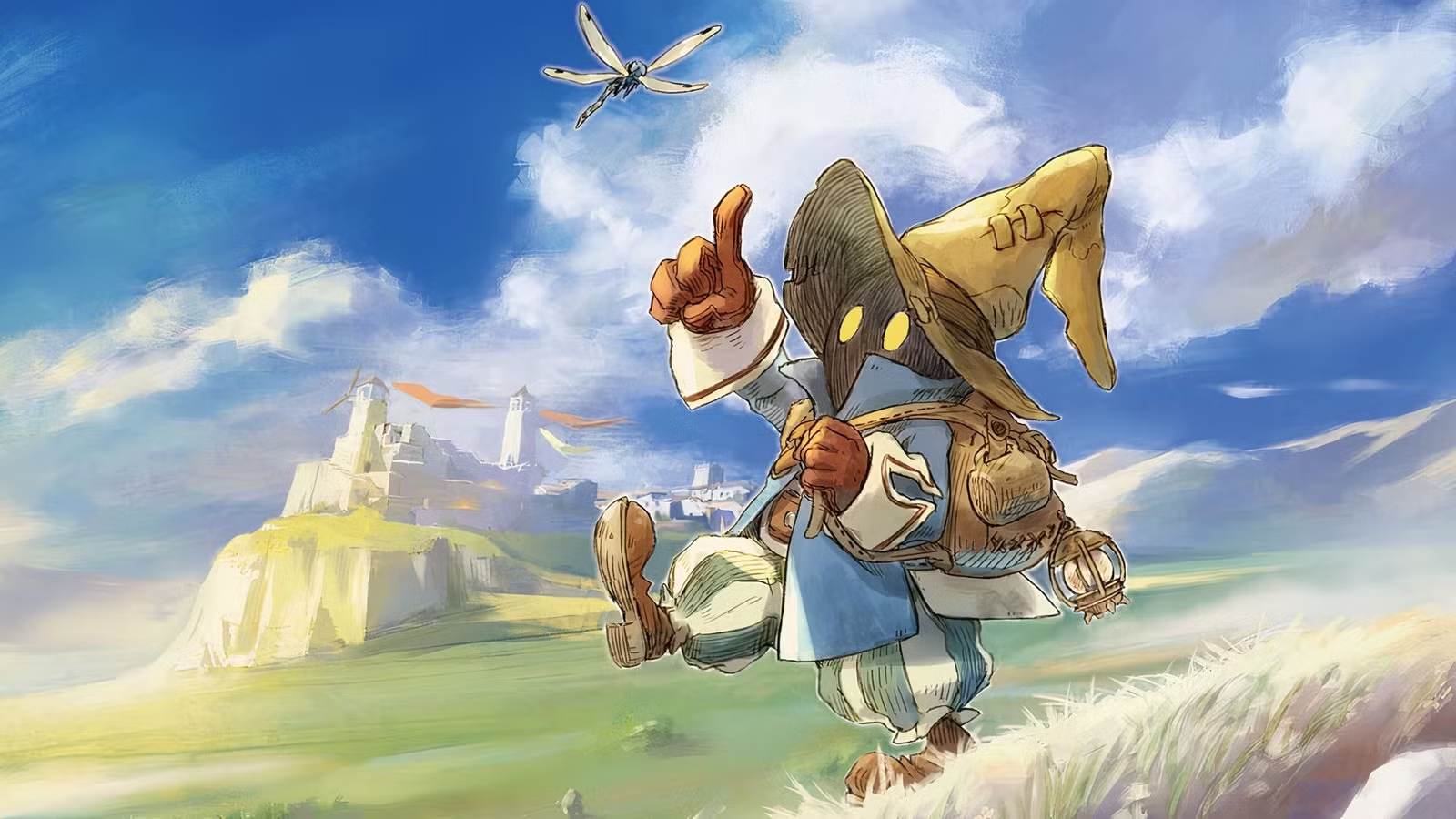
Square Enix plants its flag in the remake space with Final Fantasy 9: Not Alone, arriving October 2026. The announcement confirms the studio's pivot toward reimagining its most beloved properties rather than chasing numbered sequels.
Final Fantasy 9 holds unique cultural real estate. Released in 2000 on PlayStation 1, it stands as the final mainline entry before the franchise splintered into spin-offs, sequels, and spin-off sequels. The game's return to a medieval fantasy setting, after FF7 and FF8 pushed toward cyberpunk and military aesthetics, created something that resonated across generations. Its ensemble cast, emotional storytelling, and theatrical tone built a fanbase that never softened.
The remake's title, "Not Alone," signals thematic intention. It hints at community, companionship, and the bonds between Zidane and his ragtag crew. For a franchise that spent years chasing the FF7 Remake's epic scope and runtime, bringing FF9 to modern systems requires Square Enix to preserve its most fragile asset: that untouchable emotional core that made the original work.
This move sits alongside FF7 Remake and its sequel Rebirth, positioning older entries as the studio's forward momentum. FF9 hasn't aged poorly in the way FF6 or FF8 might challenge modern players. The game's art direction, character design, and fundamental gameplay still play. The challenge becomes expansion without dilution.
October 2026 gives Square Enix two years. That timeline suggests a scope somewhere between a modest remaster and FF7 Remake's 100-plus-hour marathon. The studio learned from FF7's mixed reception that not every beloved game needs bloating. FF9's compact structure, focused narrative, and contained world might actually benefit from remake treatment that resp