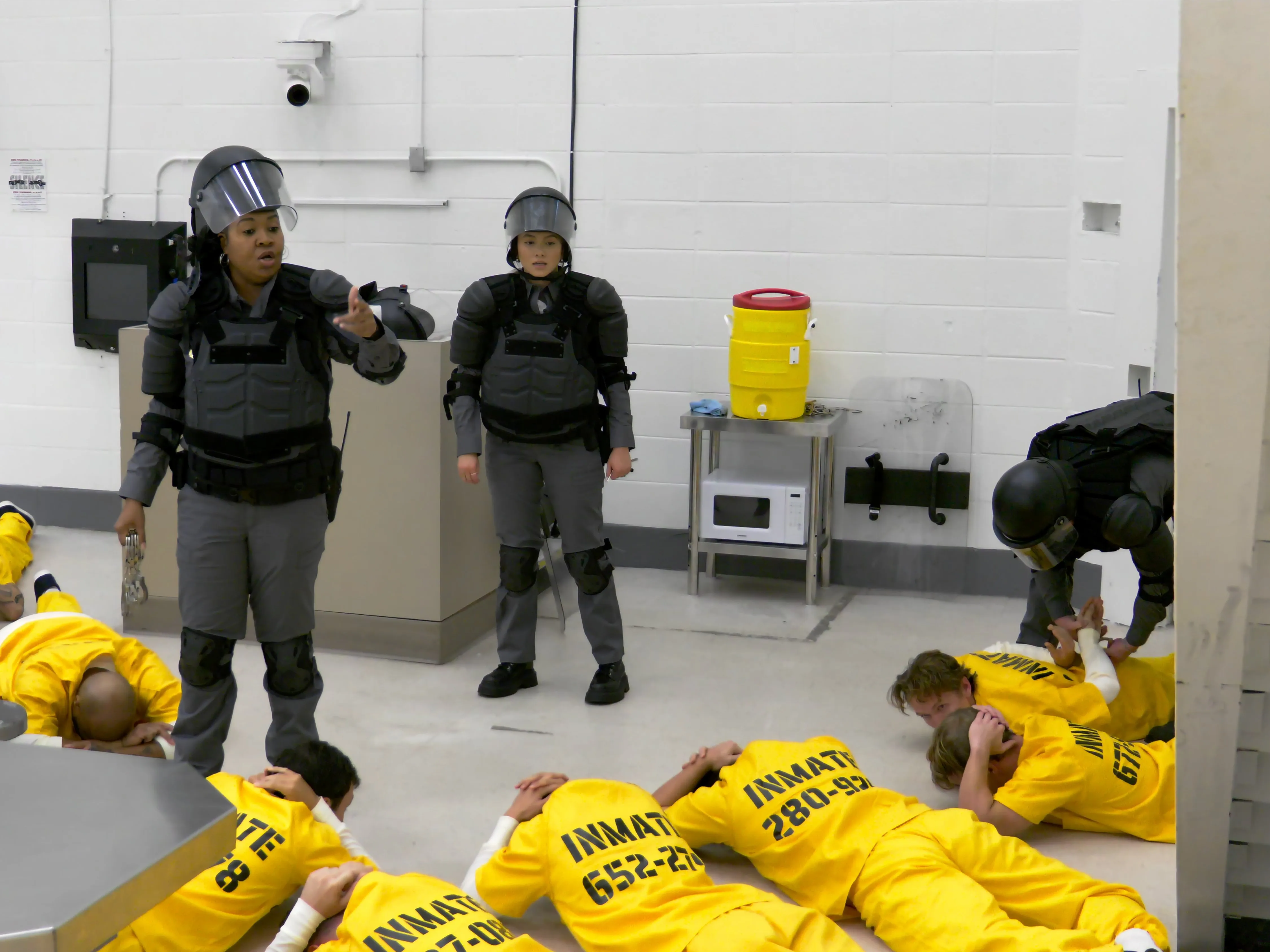
"The New Stanford Prison Experiment" charts a fundamentally different course from the infamous 1971 psychological study that birthed it, offering audiences a recalibrated take on how power corrupts and institutional structures shape behavior. The new iteration, which aired recently, concludes with optimism absent from Philip Zimbardo's original landmark trial, marking a deliberate creative pivot toward hope alongside accountability.
Zimbardo's 1971 experiment recruited 24 white male college students (with one Asian American participant) to inhabit a simulated prison for two weeks, paying each $15 daily. That original study became a cornerstone of psychology education and popular culture mythology, cementing the notion that ordinary people rapidly turn sadistic when granted authority in institutional settings. The experiment's brutality and speed became textbook fodder, shaping how generations understood human nature under constraint.
The new Stanford Prison Experiment reimagines this framework. Rather than treating institutional malice as an inevitable outcome of power dynamics, the contemporary version charts a path toward redemption and systemic change. This thematic shift reflects evolving cultural conversations about accountability, reform, and whether psychological determinism actually explains human cruelty or whether better systems prevent it altogether.
The original Zimbardo study has faced scrutiny in recent years. Academics and journalists have questioned whether guards actively played roles, whether Zimbardo himself influenced outcomes, and whether the experiment's methodology held genuine validity. Philip Zimbardo's legacy became complicated as researchers identified potential confirmation bias and directorial manipulation within the trial's structure. This backdrop makes the new version's hopeful ending particularly resonant. Rather than recycling the deterministic message that humans inevitably become monsters, it asks whether different conditions, oversight, and awareness might produce different outcomes.
The creative decision to end on a hopeful note signals something broader about contemporary television storytelling. Prestige limited series and documentary-adjacent dramas increasingly interrogate historical trauma and psychological research through contemporary lenses. Audiences no longer accept bleak determinism as inevitable truth. Instead, viewers engage with narratives that acknowledge institutional failure while exploring paths toward repair.
By offering a contrasting conclusion to Zimbardo's original framework, "The New Stanford Prison Experiment" becomes both a critique of the original study and an intervention in how popular culture understands power dynamics. The show asks: What happens when we actively resist the impulse to let systems corrupt us? What role does awareness play in preventing institutional cruelty?
This approach differs sharply from recent prestige television's tendency toward nihilism. Shows like "Squid Game" or "The White Lotus" deploy horror and degradation as inevitable consequences of social hierarchy. "The New Stanford Prison Experiment" instead suggests that informed participants, proper guardrails, and consciousness can interrupt cycles of cruelty. Whether that optimism reflects genuine psychological insight or simply reflects audience fatigue with darker narratives remains open to interpretation.
The series ultimately functions as both historical document and contemporary commentary. It examines Zimbardo's trial while using that examination to ask what we might do differently now. That tension between historical reckoning and forward-looking possibility defines the show's creative ambition, making it distinct from straightforward recreations or conventional prestige drama.