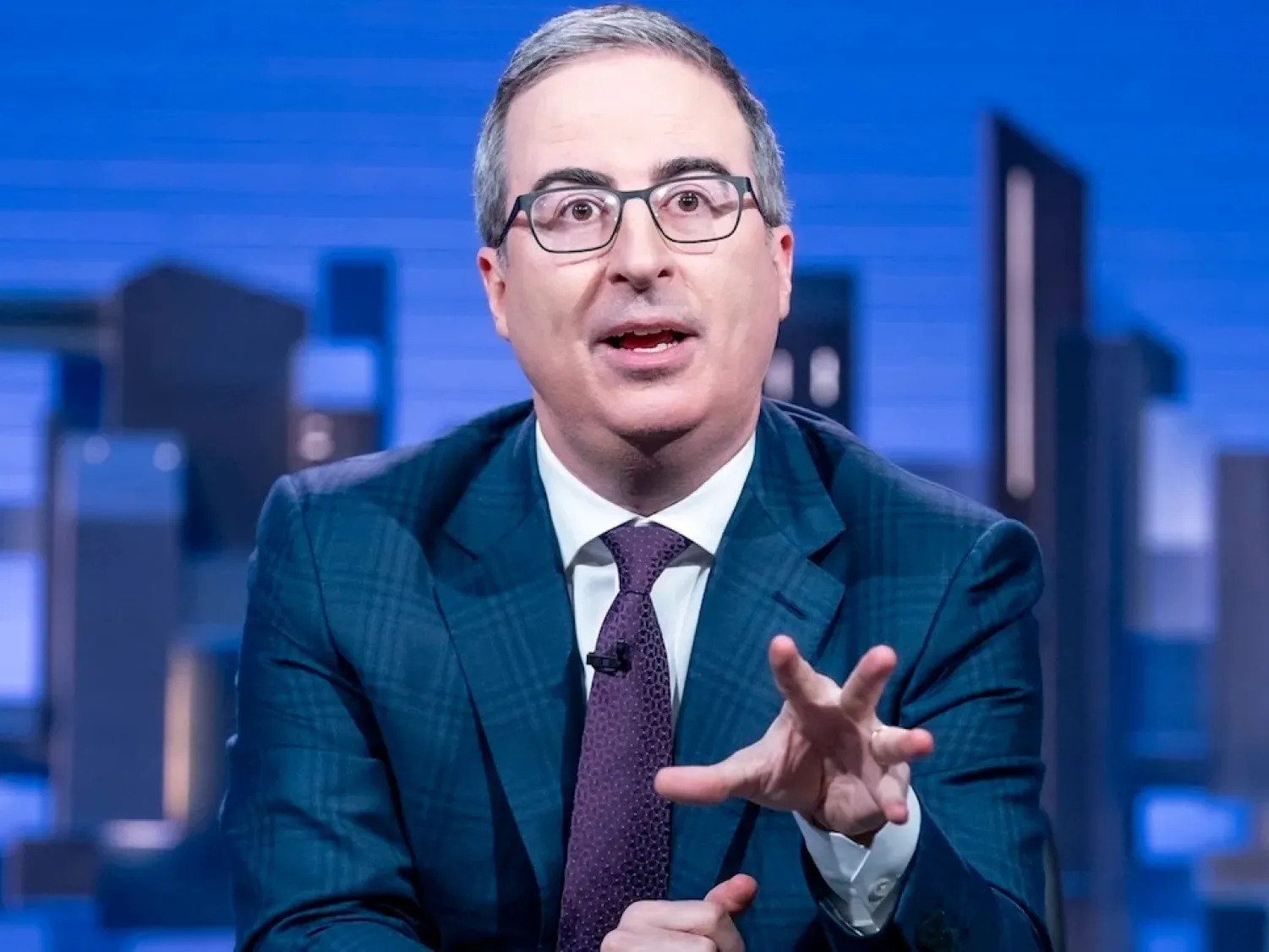
# John Oliver Targets Republican Nazi Ties in Midterms-Focused "Last Week Tonight"
John Oliver returned to HBO's "Last Week Tonight" after a two-week hiatus to deliver a pointed 30-minute segment examining what he framed as a "worrying trend" within the Republican Party ahead of the November midterm elections. The episode zeroed in on documented instances of GOP candidates and party figures displaying Nazi symbolism, rhetoric, or ideological alignment, positioning the topic as central to voter consideration in the upcoming race.
Oliver's approach followed the established format of "Last Week Tonight," which pairs investigative reporting with satirical comedy to dissect political narratives. The segment opened with Peter Oberacker, a Republican candidate whose campaign drew scrutiny for connections to far-right elements, though Oliver's reporting extended beyond a single candidate to trace what he characterized as a pattern within party infrastructure and grassroots support structures.
The timing of the segment proved deliberate. With midterms less than two weeks away, Oliver used his platform to elevate a story that mainstream political coverage had largely compartmentalized or relegated to cable news sidebars. HBO's late-night franchise, anchored by Oliver since 2014, commands consistent viewership among politically engaged adults and carries outsized cultural resonance in online discourse. The network renewed "Last Week Tonight" through 2024, reflecting its status as a ratings and critical anchor for HBO.
Oliver's episode reflects broader anxieties within Democratic messaging circles heading into midterms. While national media focused heavily on inflation, abortion access post-Dobbs, and democracy itself as campaign terrain, the incorporation of extremism messaging into primetime entertainment television signals how political stakes had permeated previously entertainment-focused spaces. "Last Week Tonight" operates in that intersection where entertainment legitimizes political argument for audiences skeptical of traditional news presentation.
The episode's release came amid documented reporting on far-right infiltration within Republican primary campaigns. Multiple candidates across states had faced exposure for ties to white nationalist movements, QAnon networks, or explicit Nazi imagery. These stories competed for attention in fragmented media environments where cable news, social media algorithms, and streaming platforms each amplified different narratives based on audience composition.
Oliver's HBO placement gave the segment reach that cable news couldn't replicate. HBO's streaming service Max reaches younger demographics, and clips extract to YouTube and TikTok where they accumulate millions of views independent of HBO's broadcast premiere. This distribution model transformed "Last Week Tonight" into something resembling a hybrid news organization with comedy framing, a role Oliver has inhabited increasingly since the show launched during the 2016 election cycle.
The episode underscored how late-night television evolved from pure entertainment into a primary vehicle for political agenda-setting. Stephen Colbert on CBS, Jimmy Fallon on NBC, and Seth Meyers on NBC all integrate political commentary into nightly routines, but Oliver's HBO placement and 30-minute format allow deeper investigation than network constraints permit. He operates with fewer commercial pressures and less advertiser sensitivity than broadcast television, enabling sharper political speech.
Whether Oliver's segment influenced midterm voting patterns or shifted media narrative remained unknowable pre-election, but the episode's existence itself signaled how urgency around extremism had penetrated entertainment television's prime real estate. The return from hiatus, coupled with the decision to dedicate an entire episode to this single theme, reflected editorial judgment that the story warranted that level of amplification heading into votes.