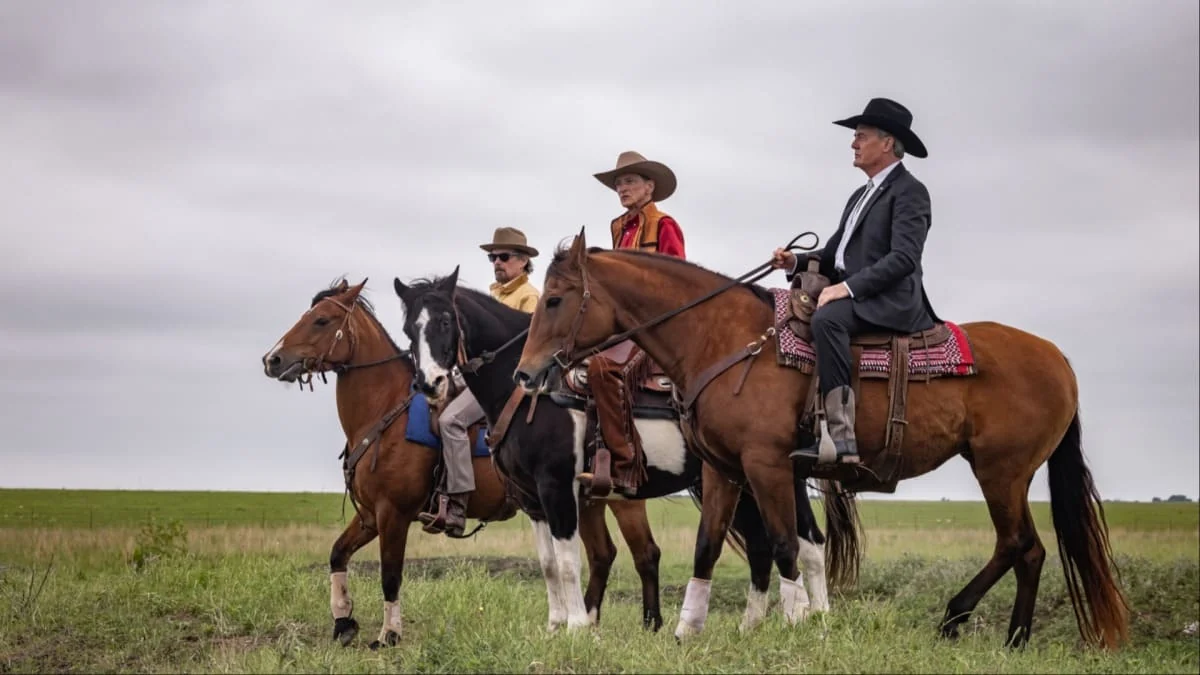
The Lowdown's second season has masterfully peeled back layers of mystery to expose something far more sinister than a simple missing person case. With the introduction of Judge Jed Sallsman, played by John Hawkes, the show has finally revealed who sits atop the corrupt pyramid in Woodrell County. What makes this revelation particularly effective is how deliberately the show positions Sallsman as the antithesis of Hawkes' most celebrated role—Sol Star from Deadwood. Where Sol was kind and principled, Sallsman is two-faced and ruthless, a man who thinks he's "the second coming of John Wayne" while orchestrating a system of exploitation that would make any real outlaw blush.
Hawkes' performance in "A Dog With Two Tails" is a masterclass in embodying modern corruption dressed in frontier aesthetics. From his first appearance in a diner, Hawkes employs a lower vocal register and a blend of "folksy charm and sharp-eyed grimness" that perfectly encapsulates Sallsman's true nature. The judge's tour of his expansive ranch, Tallgrass, is not an act of hospitality but a calculated display of power—a demonstration of how thoroughly he controls Woodrell County's fate. His Fresh Start program, blandly named and presented as a benevolent meatpacking facility where incarcerated men can work instead of languishing in cells, is the crown jewel of his operation: a system so insidious it doesn't even require guards on the payroll.
What elevates Hawkes' portrayal is his ability to make viewers understand exactly what Lee recognizes instinctively. The promotional video for Fresh Start is designed to convince observers that no one would want to leave, yet Lee's glower after watching it speaks volumes. The judge has constructed a world where exploitation wears the mask of opportunity, where corruption operates behind the veneer of cowboy authenticity. This is a character who watches Taylor Sheridan's contemporary Western universe and yearns to inhabit it, but lacks the self-awareness to recognize that his real-world version is far darker than fiction.
The danger of Sallsman isn't merely his position as judge—it's his ability to make men like Governor Donald Washberg complicit through sheer charm and the promise of political expediency. While Washberg tries to hold Lee in check, preventing awkward questions about cattle counts or Fresh Start tours, Sallsman sits confidently, knowing that most people lack Lee's willingness to see through the performance. Yet as the episode concludes with Ginger held at gunpoint by McMann and Lonnie at a gas station, the real cost of challenging this system becomes clear. Sallsman doesn't need to dirty his hands—he has Sheriff Vela Thorne and her thuggish deputies for that.
The Lowdown has found its true antagonist, and he's far more terrifying than any conventional villain because he operates within the law he himself interprets. John Hawkes has given us a portrait of American corruption in its most seductive form: power that speaks softly, dresses well, and genuinely believes its own mythology. The question now isn't whether Lee can expose Fresh Start or prove Mekko Dean's fate—it's whether anyone can survive attempting to.