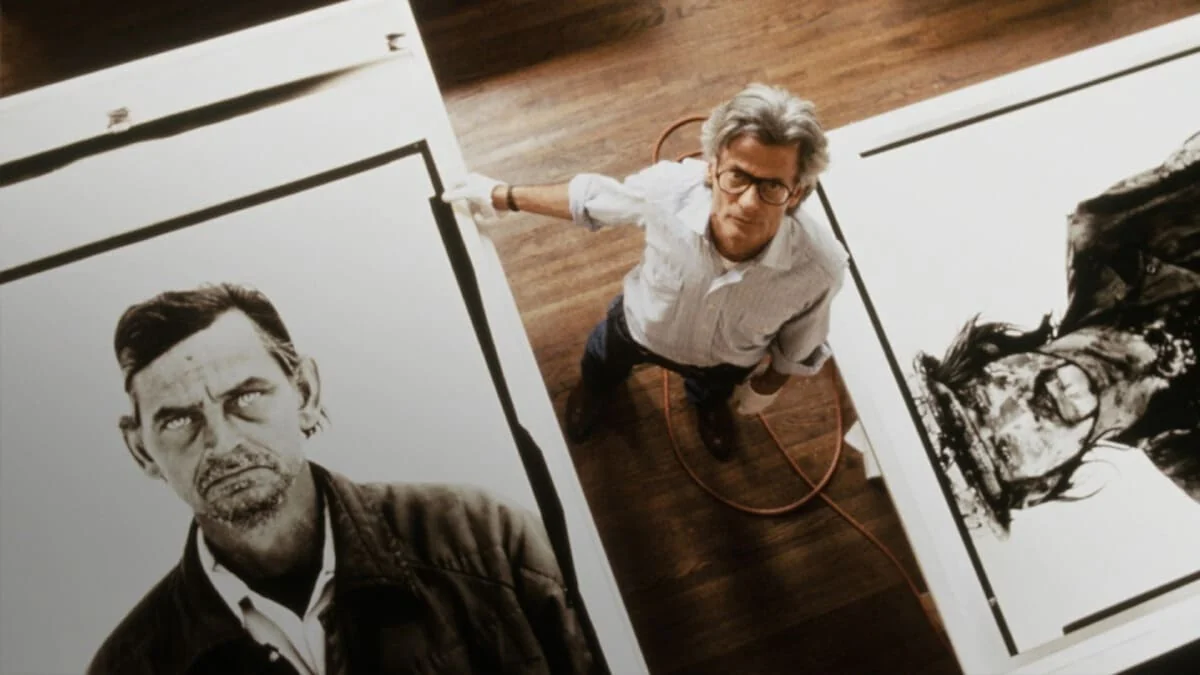
Ron Howard's documentary Avedon explores photographer Richard Avedon's full career, moving beyond his famous fashion work to examine his politically engaged output. The film covers Avedon's iconic portraits of celebrities like Marilyn Monroe, the Beatles, and Twiggy, but spends equal time on his lesser-known projects that challenged viewers to see humanity in marginalized subjects.
Avedon grew up in the Bronx and became friends with James Baldwin at school. The two collaborated on the photograph book Nothing Personal, which paired Baldwin's text with Avedon's images of everyday people across races, documenting both joy and anguish during the Civil Rights Era. Avedon photographed Martin Luther King Jr. and Malcolm X for the book, giving them respect that many magazines avoided at the time.
Howard explores Avedon's photographs of mental health patients at Bellevue Hospital, taken so "that we pay attention." The work held deep personal meaning for Avedon, as his sister Louise, credited as his first model, died in a catatonic state in a mental institution. Avedon's sister inspired his lifelong pursuit of honesty in portraiture.
The documentary examines Avedon's political photography through several key projects. When profiling the Chicago Seven during their trial, Avedon posed them against his signature white backdrop, creating images that resembled both fashion spreads and police mugshots. Howard includes taped audio recordings of the session with outtakes to show Avedon's process of rendering political figures as human. Later, Avedon used similar visual concepts to photograph Vietnam War bureaucrats opposite portraits of scarred Vietnamese survivors.
Howard's approach differs from his narrative biopics. The documentary explores Avedon's contradictions without avoiding darker aspects of his character, including his workaholic tendencies, use of work as escape, and familial absence when he relocated to his studio. Howard treats these complexities as worth examining rather than omitting.