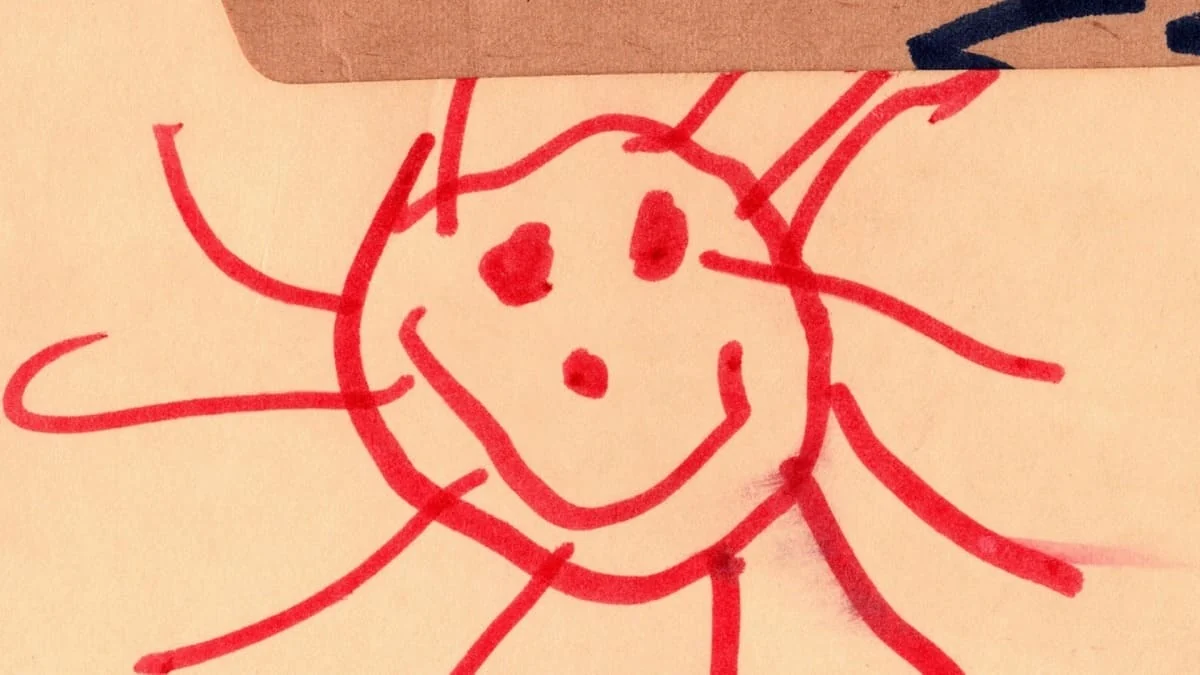
Don Hertzfeldt's latest film, Paper Trail, runs under 15 minutes and contains no line-drawn characters or traditional plot. Instead, the filmmaker tells the story through everyday materials and handwriting that evolves across a human lifespan.
The film traces an unseen character named Steven Richardson from childhood through adulthood using practice sheets, homework assignments, tests, applications, and government forms. Colorful paint splotches appear first, then crayons, markers, and eventually formal paperwork. Steven's handwriting deteriorates over decades as he moves into a well-paying job, until his hand can only leave dots on the page.
Throughout the film, Steven exchanges dialogue with a girl named Lindsay as they grow up together in school. Hertzfeldt shows only Steven's responses, not hers, creating uncertainty about what comes next. Lindsay gradually disappears from Steven's world as work takes over, delivering what the filmmaker frames as a subtle warning about letting career consume life.
Hertzfeldt has used minimalist stick figures in previous films like It's Such A Beautiful Day and World Of Tomorrow to explore mental health, death, and existential themes. In Paper Trail, he removes onscreen characters entirely. Steven becomes a stand-in for the audience. Acts like learning to paint and repeating letters are experiences most viewers share.
By erasing the animator's hand and tools from the frame, Hertzfeldt focuses only on what lands on paper. He speeds through decades of monotonous work, using the deterioration of Steven's signature to mark the passage of time and suggest aging. The film lets viewers' own nostalgia reinforce its anxieties about lost connections and work consuming life.