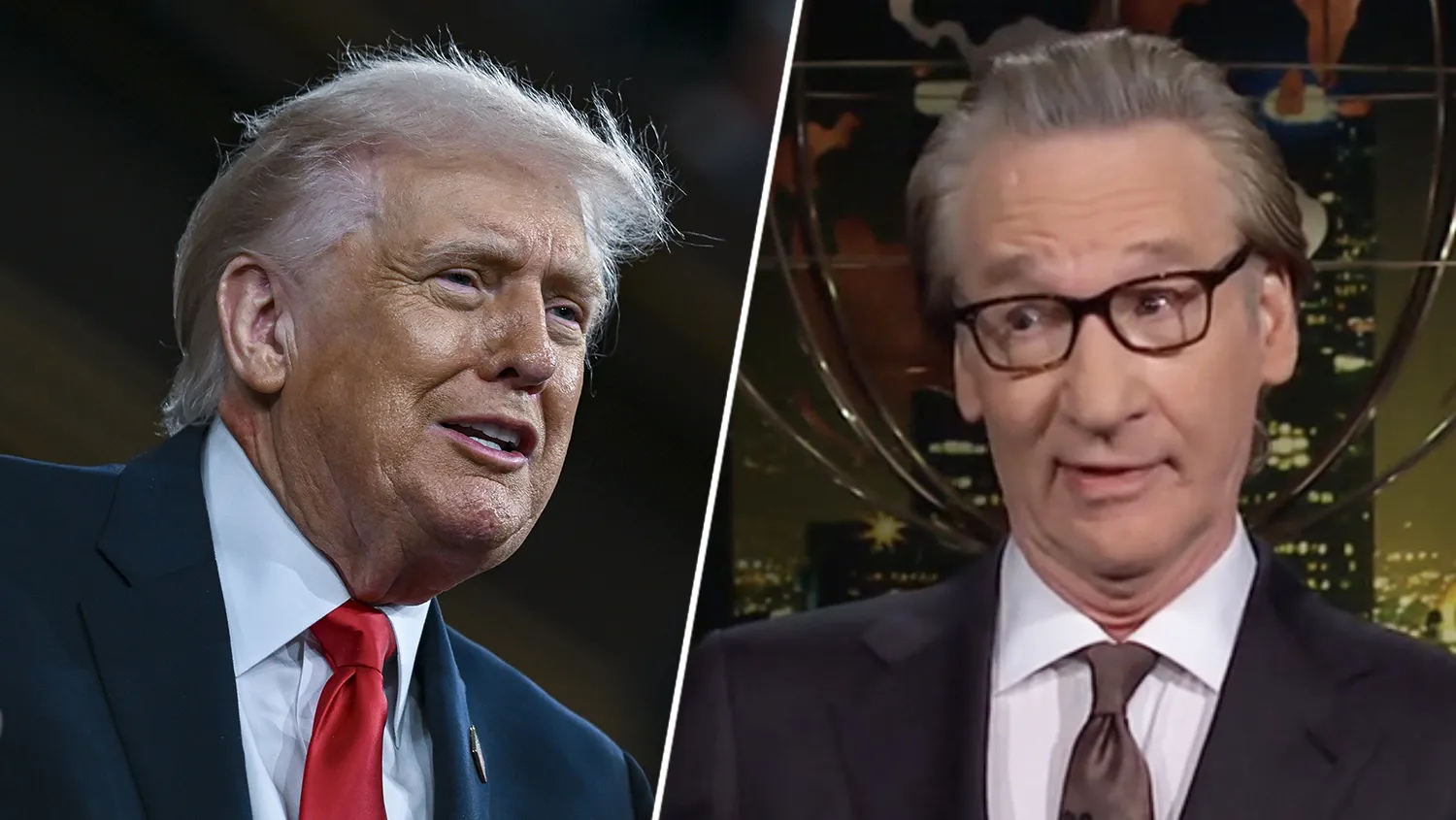
Donald Trump turned on Bill Maher with a venomous 1,300-word post Sunday night, nine days after the late-night host visited the White House for what Trump had called a "great dinner." The reversal erupted over jokes Maher made on Friday's edition of HBO's Real Time, the weekly political talk show that airs on HBO Max.
The timing reveals the precarious nature of Trump's media relationships. Public praise can evaporate into scorched-earth attacks within days when Trump perceives slights or unflattering commentary. Trump's posts, distributed through his social media channels, branded Maher a "complete and total loser" and targeted both his comedy and his credibility as a broadcaster. The language escalated fast, moving from hospitality to character assassination.
Maher had reciprocated the dinner invitation with compliments on his own show, but that goodwill dissolved the moment the Real Time host returned to his regular programming and monologue material. Trump does not tolerate late-night hosts or comedians mining his actions and statements for comedy, a sensitivity that predates his presidency. The dinner itself appears to have been a strategic overture, the kind of personal engagement Trump uses to soften media coverage or build relationships with influential cultural figures. When that investment did not translate into changed behavior from Maher, Trump responded with rage.
HBO's Real Time remains one of cable's most durable political platforms, built on Maher's willingness to challenge guests across the ideological spectrum and to deliver pointed social commentary. The show reaches politically engaged viewers who consume news actively and engage with opinion programming. Maher's brand relies on irreverence and sharp critique, not on deferential treatment of powerful subjects. Trump's expectation that a White House dinner would alter Maher's editorial voice reflects either a misunderstanding of how late-night comedy works or an assumption that Trump's personal charm translates directly into media loyalty.
This is not Trump's first skirmish with late-night television. His relationships with hosts like Jimmy Fallon, Stephen Colbert, and Jimmy Kimmel have ranged from contentious to hostile depending on the night's monologue. Trump has repeatedly attacked the late-night ecosystem for what he characterizes as biased, unfair treatment. His counter-strategy has included public feuds, social media takedowns, and attempts to build direct audience relationships through alternative platforms. The dinner with Maher fit into that broader playbook: access and personal engagement as a tool to reshape media behavior.
Real Time's Friday episode apparently contained material that Trump found particularly offensive or damaging. The specific jokes remain unreported in the available coverage, but Trump's response suggests they touched on his political standing, personal conduct, or business interests. Trump's response post did not simply critique Maher's comedy but attacked his intelligence, his motives, and his relevance. The language Trump deployed tracked with his standard media criticism vocabulary: fake news, dishonesty, failure.
For Maher and HBO, the public attack creates both risk and opportunity. Real Time's audience largely overlaps with Trump critics who would expect Maher to maintain editorial independence from presidential influence. A publicly feuding Trump actually validates Maher's brand as an outsider voice willing to take shots at power. The network benefits from the cultural conversation the spat generates. HBO Max has built its HBO programming into a cornerstone of its streaming strategy, with Real Time as a signature franchise. That position depends on Maher retaining credibility as someone who cannot be intimidated or bought off, even by presidential dinners.
Trump's post-dinner aggression reveals something about how he processes media coverage. The dinner represented a reset, a chance to build rapport. When that rapport did not produce the result Trump wanted, the relationship snapped instantly. This pattern has repeated throughout Trump's public life, from his dealings with network executives to his treatment of journalists. For figures in media considering engagement with Trump, the Maher precedent offers a clear lesson: proximity does not guarantee favorable coverage, and perceived betrayal, however slight, triggers disproportionate retaliation.
The incident lands amid broader questions about Trump's media strategy and his effectiveness at shaping coverage through personal relationships. His social media reach remains substantial, but the long-form posts that once dominated news cycles now compete with breaking news and the proliferation of digital content. Whether Trump's 1,300-word takedown of Maher damages the comedian's reputation or simply generates another news cycle remains to be seen. For Real Time's audience, it likely reinforces the perception that Maher operates independently of power.