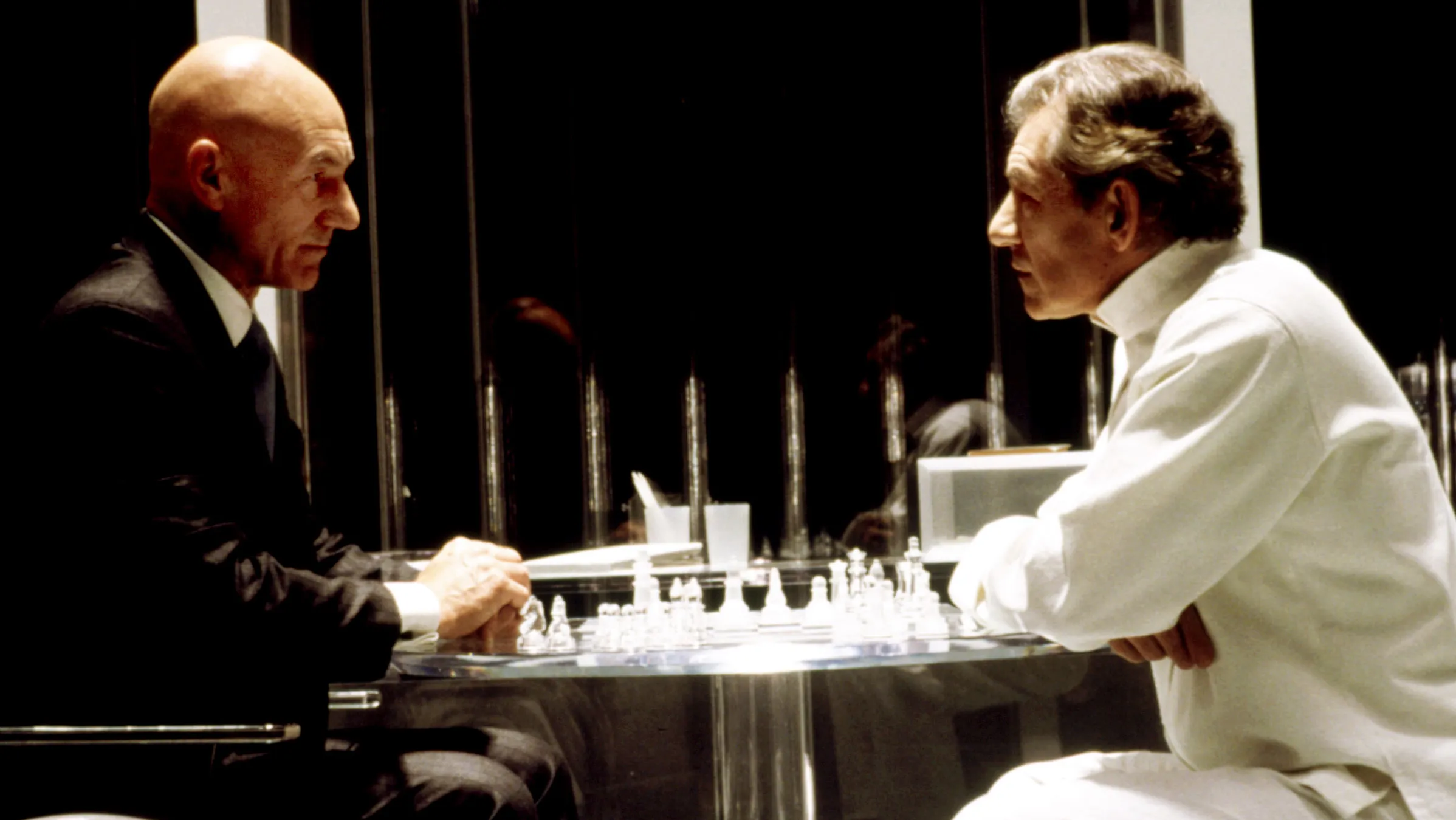
The death of Sir Patrick Stewart at age 86 represents not just the loss of a brilliant actor, but the passing of a figure who embodied a kind of honesty that feels increasingly rare in entertainment. Sir Ian McKellen's tribute, shared on Instagram following the revelation that Stewart died after a diagnosis of Alzheimer's Disease and Lewy Body Dementia, captures why his longtime collaborator and friend mattered so deeply. McKellen's words—that Stewart 'wore his heart on his sleeve'—speak to something essential about the late actor's career and character that extends far beyond his iconic roles.
McKellen's description of Stewart as 'a man to rely on, to admire and in my case, love' reflects a professional relationship built on genuine mutual respect. The two starred together as Magneto and Professor X in the X-Men films, creating one of cinema's most compelling rivalries. Yet what made their on-screen partnership work was clearly grounded in something real off-screen. McKellen's willingness to publicly declare his love for Stewart—something he emphasized by placing it in the context of admiration and reliability—demonstrates how Stewart's authenticity created space for others to be authentic in return.
What McKellen emphasizes about Stewart being 'born and bred in Yorkshire' and the 'stern honesty with which he told you what he thought and felt' speaks to a particular brand of integrity. The proud county in the north of England clearly shaped Stewart's worldview in ways that persisted throughout his life and career. McKellen notes that 'Yorkshiremen have no truck with half-truths or avoidance of big issues,' and Stewart embodied that principle. In an industry often built on carefully curated images and strategic positioning, Stewart's refusal to engage in evasion was genuinely distinctive.
The entertainment world needs more figures willing to wear their hearts on their sleeves as Stewart did. This isn't merely sentimental nostalgia for a deceased icon; it's an acknowledgment that Stewart's approach—combining professional excellence with emotional honesty—created something that resonated across generations. Whether discussing his Shakespearean roots, his activism, or his personal life, Stewart never seemed to calculate his words for maximum brand appeal.
As the industry processes the loss of Stewart and his battles with Alzheimer's Disease and Lewy Body Dementia, McKellen's tribute serves as a crucial reminder of what we're grieving. We're not just losing a performer; we're losing someone who modeled a different way of being in the world. That's a legacy worth protecting and emulating as entertainment moves forward.