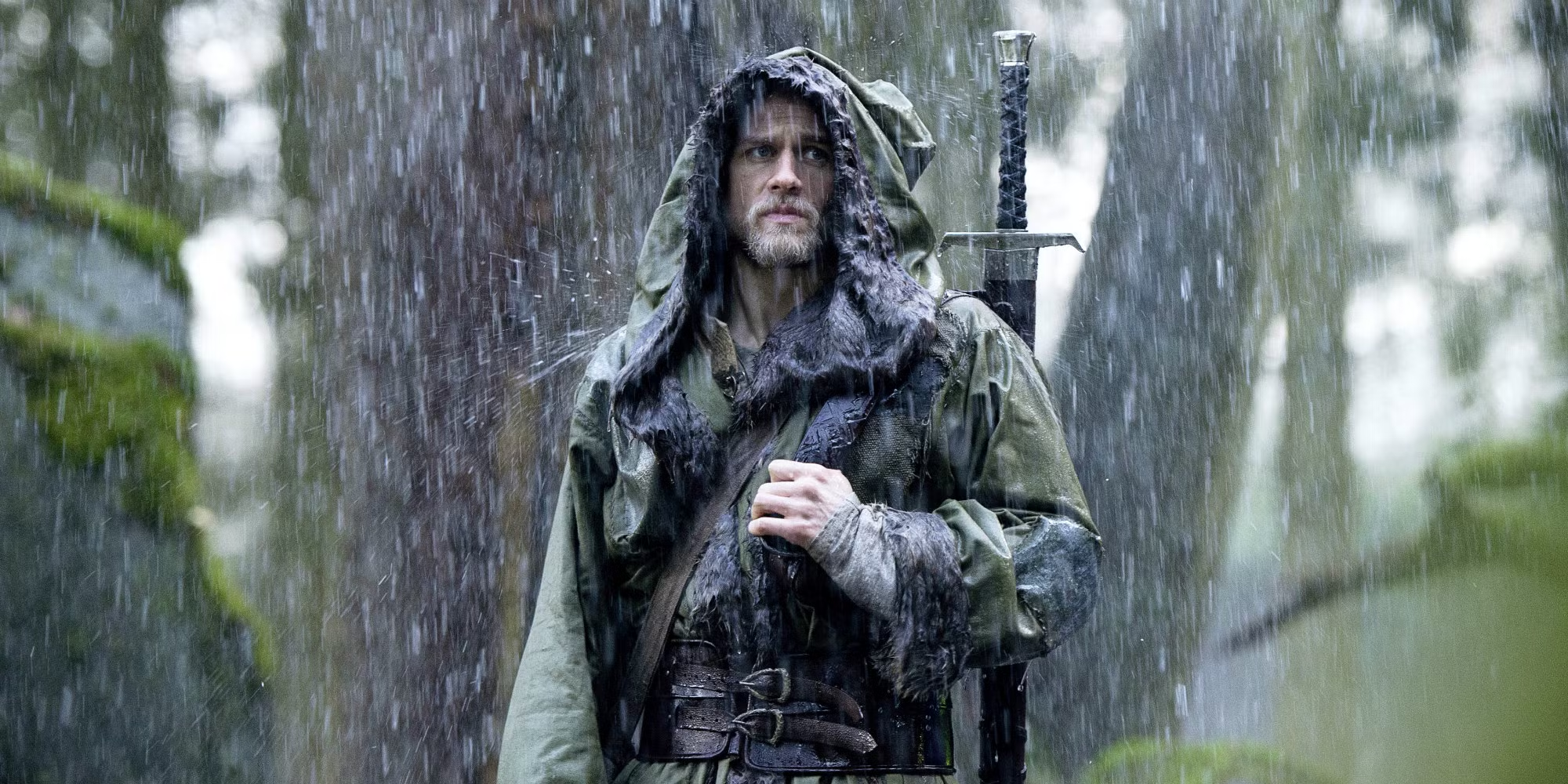
It's gratifying to see Guy Ritchie's 2017 King Arthur: Legend of the Sword finding new life on Netflix, currently settled into the Top 10 on the streamer's list of popular movies. But there's something bittersweet about celebrating a film that, despite its stylistic merits and clear ambition, never got the chance to build on its foundation. Ritchie took a genuine risk with Arthurian legend—reimagining it through his signature kinetic action sensibility rather than the Shakespearean gravitas we expect from the source material. The result deserved more than to be left as a standalone entry in cinema's King Arthur catalog.
The film's strengths are undeniable. Charlie Hunnam carries the weight of Excalibur as a protagonist learning to claim his destiny, surrounded by a capable cast including Eric Bana as Uther Pendragon and Jude Law as the treacherous Vortigern. Daniel Pemberton's rousing score pulses alongside Ritchie's distinctive action choreography, creating something that feels genuinely modern rather than trapped in period-drama conventions. The visual language—the kind that made the Sherlock Holmes films (with Robert Downey Jr.) work as Ritchie reinterpretations of British icons—gives Legend of the Sword its own distinct identity. Even Merlin, relegated to a minor player through Kamil Lemieszewski, and the Lady of the Lake (Jacqui Ainsley) serve Ritchie's narrative vision effectively.
What's frustrating is that the film's relative underperformance upon release apparently closed the door on sequels before the story could truly expand. Arthurian legend thrives on multiple interpretations precisely because the mythology is vast and malleable. Ritchie's version, with its questions of destiny and fate undergirding Arthur's moves toward the crown and the mythic Round Table, created genuine potential for deeper storytelling. A second installment could have explored the challenges of building Camelot, the complexities of the Round Table's formation, or the political machinations within Arthur's newly won kingdom.
The fact that King Arthur: Legend of the Sword is now trending on Netflix suggests there's an audience willing to engage with Ritchie's audacious take. This should serve as a wake-up call to studios about greenlighting sequels for films with distinctive visions and proven audience appeal, even if they didn't dominate the theatrical box office. Sometimes films find their true audience on streaming platforms, and that's precisely the argument for giving them a second chapter. Ritchie had proven he could make Arthurian legend feel urgent and contemporary. The mistake was assuming one film would be enough.