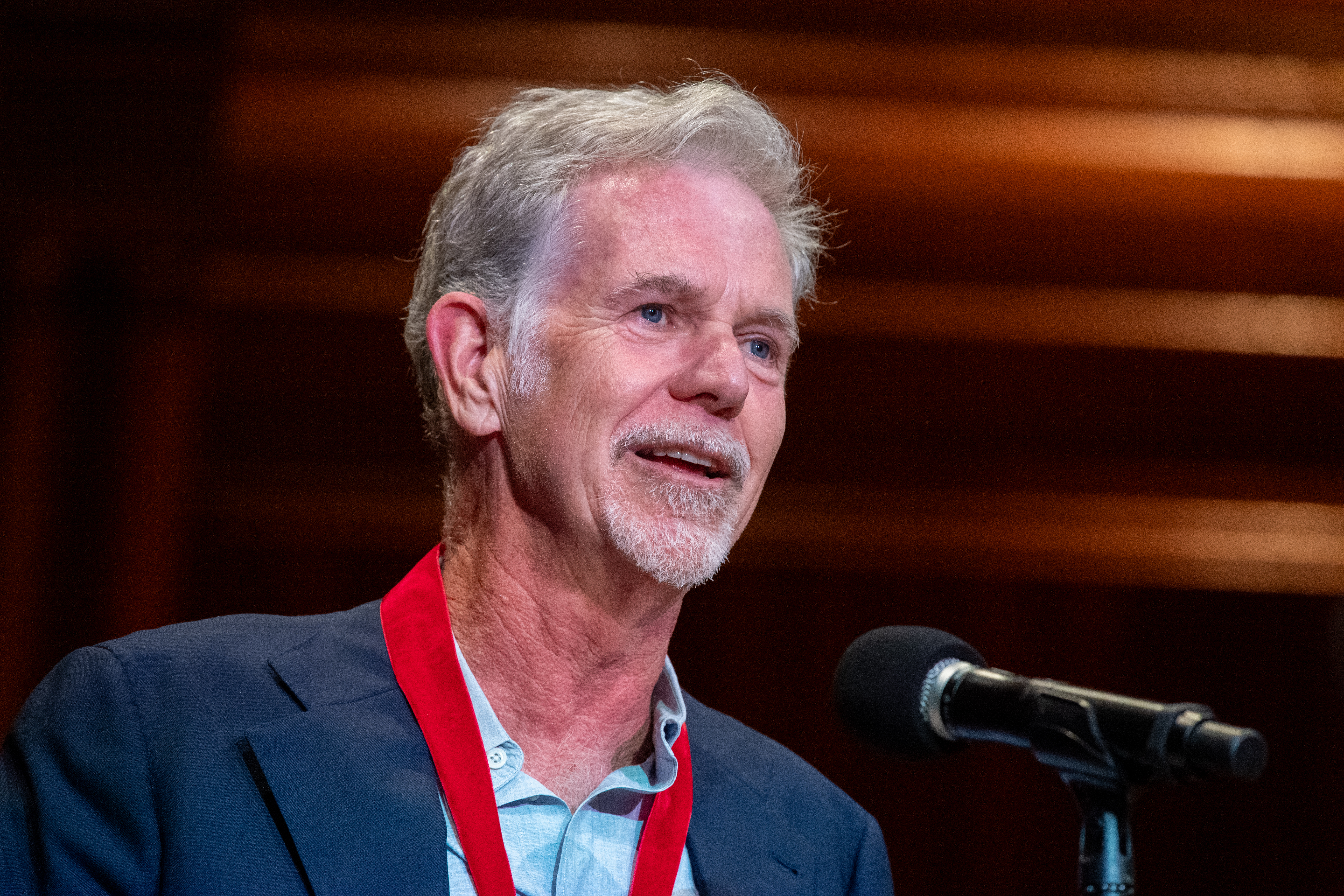
Reed Hastings is orbiting the Netflix narrative again, offering unsolicited guidance on how the streamer can recapture its cultural momentum after he stepped back from the company last June. The co-founder, who built Netflix into a global entertainment juggernaut over three decades before transitioning to board member status, told colleagues he learned about the layoffs of roughly 1,000 employees (6% of staff) through news reports rather than internal channels. This disconnect illuminates the operational distance Hastings now maintains from the business he designed.
Hastings frames Netflix's current challenge as an identity crisis rooted in creative complacency. The phrase "being thrilling" carries weight from someone who shaped the company's risk-taking ethos during its transformation from DVD-by-mail rental service to content production powerhouse. His diagnosis suggests Netflix has grown bureaucratic, losing the innovative edge that drove breakout successes like "The Crown," "Stranger Things," and "Squid Game." The timing matters. Netflix faces mounting pressure from entrenched competitors (Disney+, Max, Prime Video) and insurgent platforms. YouTube's ascendant entertainment footprint now rivals traditional streamers in engagement metrics, a threat Hastings directly addresses.
The YouTube rivalry represents a seismic shift in how audiences consume entertainment. TikTok creators command comparable attention to prestige television stars. YouTube's algorithm-driven recommendation engine mirrors Netflix's own engine, but YouTube operates at lower production cost with higher viewer throughput. For Hastings, this signals Netflix must outpace the competition creatively, not just compete on library size or subscriber churn. The emphasis on "thrilling" content suggests a return to high-concept, conversation-starting originals that generate cultural water-cooler moments.
Netflix's recent operational moves support Hastings' implied critique. The company shed jobs while simultaneously investing in live events, sports programming, and cheaper unscripted content. CEO Greg Peters and co-CEO Janine Loiben navigate a paradox: maintaining margins while producing the prestige content that justifies premium pricing. Hastings' departure from active leadership removed him from daily decision-making, yet his commentary carries institutional authority. He shaped Netflix's culture for thirty years. When the founder questions current strategic direction through public interviews, it registers as either validation of internal concerns or external pressure on leadership.
The layoff disconnect deserves scrutiny. A co-founder learning about workforce reductions through media reports suggests either deliberate distancing from operational pain or a breakdown in institutional communication. Both interpretations damage Netflix's narrative. Hastings positioned himself as architect of Netflix's "culture of freedom and responsibility." That philosophy supposedly trickles down through organizational layers. The fact that foundational business decisions bypass him entirely reshapes how Netflix's stakeholders read corporate direction.
Hastings' remarks about YouTube rivalry and Netflix's need to recapture "thrilling" content speak to the existential challenge facing legacy streamers. Subscribers now expect constant innovation, not stable catalogs. Prestige television cannot sustain growth if production cycles stretch beyond audience attention spans. YouTube profits from infinite content churn. Netflix profits from discerning curation. These opposing models collide in a market where viewer time remains finite and cost-per-acquisition continues climbing.
The co-founder's re-emergence in Netflix discourse signals either confidence in current leadership or anxiety about trajectory. His emphasis on creative thrills over operational efficiency reframes Netflix's identity battle as one of ambition versus pragmatism. That tension will define Netflix's next chapter.