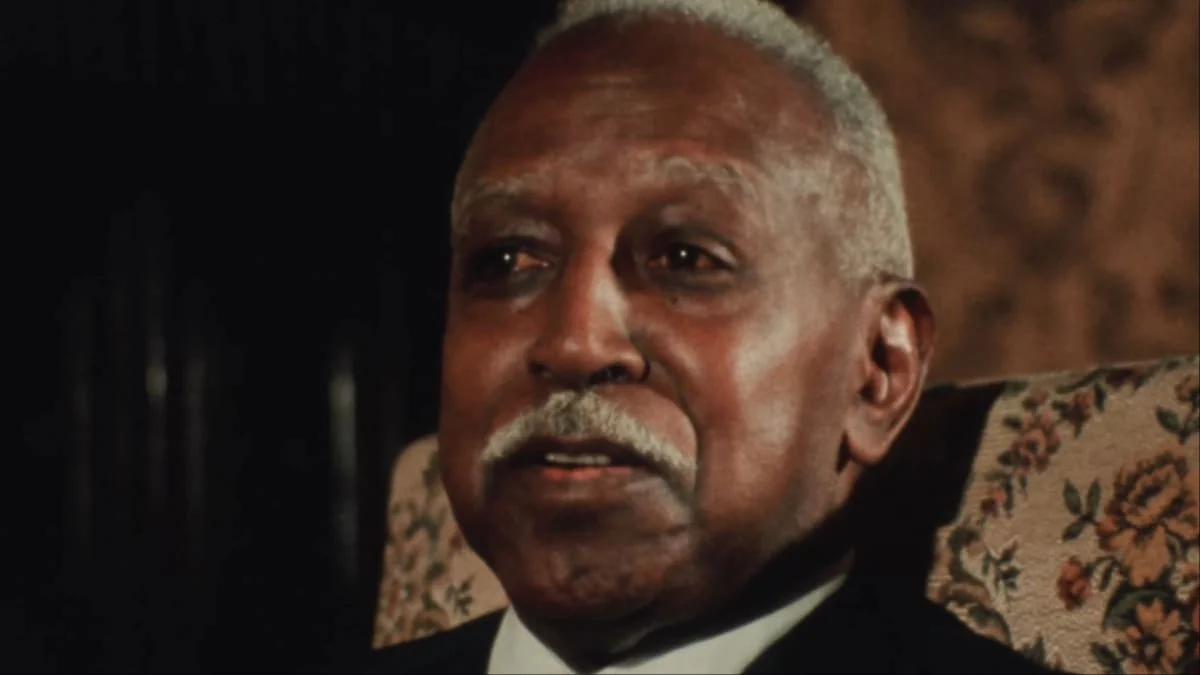
David Greaves completed his father William Greaves' documentary "Once Upon a Time In Harlem" using footage shot nearly 50 years ago. William Greaves, a pioneering independent filmmaker, began the project decades before his death in 2014 but never finished it. David Greaves and collaborators recently digitized and edited the material into a finished film.
The documentary captures two time periods. The first shows a 1970s gathering where artists and literary figures from the Harlem Renaissance discuss their work and memories. The second consists of their recollections of the 1920s, the era of the Harlem Renaissance itself.
In one scene, writer George Schuyler explains his views on defining Black art during the 1920s, when much of the country remained segregated. Schuyler saw the segregation of Black artists as a way to devalue their artistic merit. When Langston Hughes wrote a response to Schuyler's article, Schuyler felt it wasn't "sound in its reasoning." Poet Arna Bontemps viewed Hughes' response more favorably, calling the artists' commitment to their own work irrespective of racial divides the "slogan of the Harlem Renaissance."
The footage reveals how the same historical moment can be remembered differently by those who lived through it. Conversations shift between rosy memories of first loves, admiration for deceased colleagues, disagreements over details, and intellectual debate. The footage was captured in Duke Ellington's old home. Greaves told The A.V. Club that an archive of the conversations is in the works.