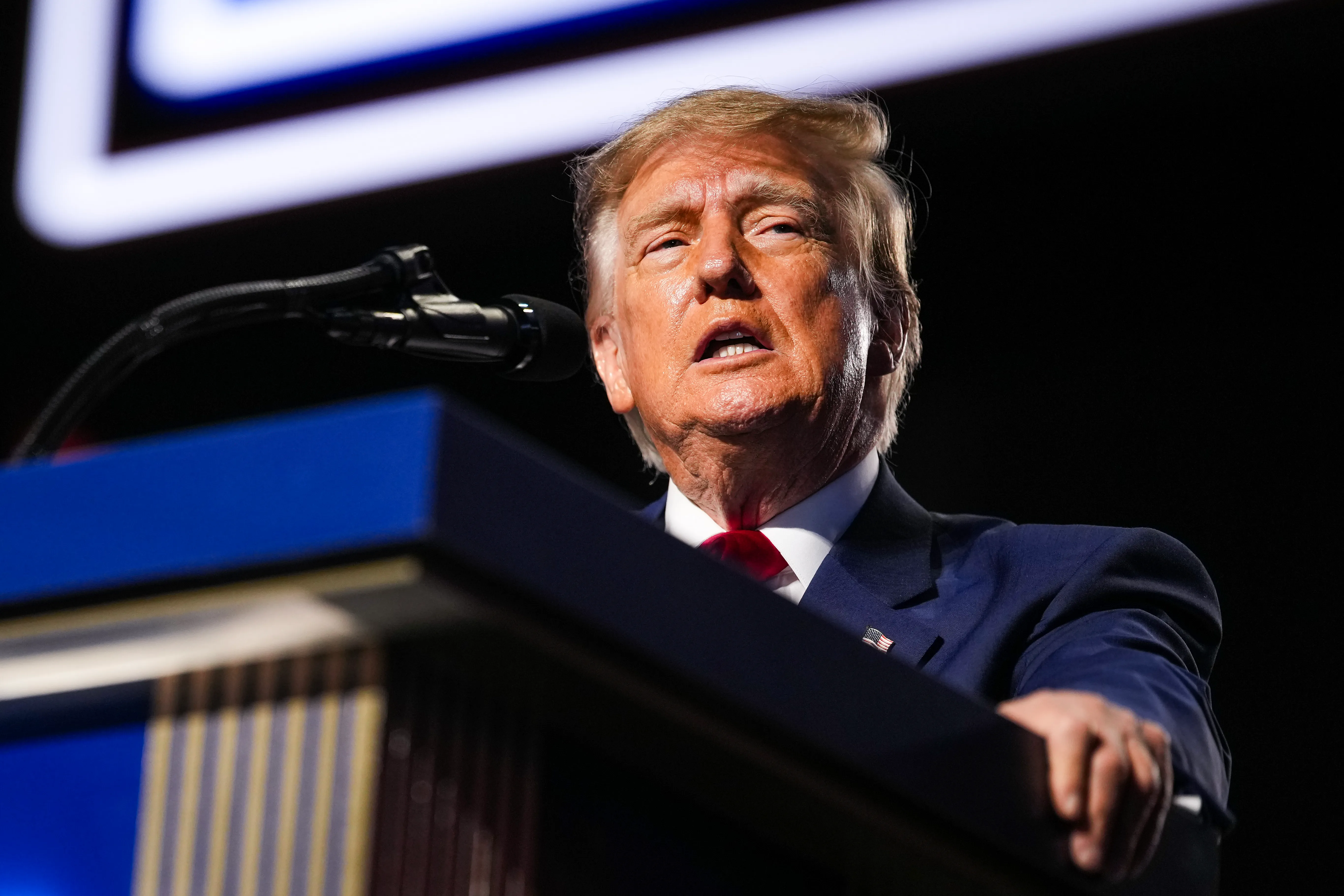
Donald Trump announced plans to ban the term "artificial intelligence" across government documents and communications, replacing it with his preferred terminology: "super intelligence." The declaration came during a White House meeting and represents Trump's latest effort to rebrand AI discourse on his own terms.
Trump's push follows a pattern of aggressive terminology control. During his January meeting with Elon Musk and other tech executives at the White House, the president emphasized "super intelligence" as the preferred nomenclature. Now he's weaponizing executive authority to enforce the shift across federal agencies and official channels. The scope is sweeping. Trump specified the ban would apply to "all relevant documents" and "everything else," suggesting an administration-wide mandate that could touch every department, agency, and official communication pipeline.
This move operates on multiple levels. Semantically, "super intelligence" carries triumphalist connotations absent from the neutral, technical term "artificial intelligence." It positions AI as advanced, powerful, and distinctly American rather than a generic technological capability available to all nations. The rebranding effort aligns with Trump's broader tech nationalism agenda, particularly his cultivation of relationships with figures like Musk, who has positioned himself as central to U.S. AI dominance.
The politics cut deeper. Trump has consistently framed AI as a domain where American innovation must reign supreme. By controlling the language, he shapes how federal agencies, research institutions receiving government funding, and contractors discuss and conceptualize the technology. Private companies following government contracts or seeking regulatory approval face pressure to adopt the terminology. Media covering government AI policy will likely shift language to match official parlance. This ripple effect extends the rebrand beyond mere symbolism.
The entertainment and tech industries watch closely. Hollywood studios, streaming platforms, and production companies increasingly integrate AI into content creation workflows. VFX studios, animation houses, and post-production facilities now deploy machine learning for rendering, rotoscoping, and digital asset creation. If Trump's mandate gains traction, entertainment industry terminology could shift accordingly. Federal grants for media research, tax incentives for production, and regulatory frameworks governing AI use in content creation all flow from government language.
Elon Musk's presence at the White House meeting underscores the decree's tech-industry implications. Musk's xAI venture, Tesla's autonomous systems, and his broader AI ambitions benefit from favorable government framing and potential regulatory tailoring. Other tech executives present included figures leading major AI initiatives. Their endorsement of "super intelligence" signals industry alignment with Trump's vision, though adoption remains voluntary for private entities outside direct government contracts.
The decree raises questions about implementation and enforcement. Which agencies enforce compliance? Do federal contractors face penalties for using "artificial intelligence" in proposals or reports? Does this extend to federal research institutions like NIST or the National Science Foundation? The vagueness creates uncertainty but signals clear intent: language control as policy tool.
Precedent exists for such efforts. Prior administrations shaped discourse through terminology mandates, though rarely this explicit. Trump's approach bypasses legislative process entirely, leveraging executive authority directly. Congress hasn't explicitly authorized this linguistic control, yet enforcement through budget approval and contract compliance gives it teeth without requiring new legislation.